Thursday, August 31, 2006

Buddha

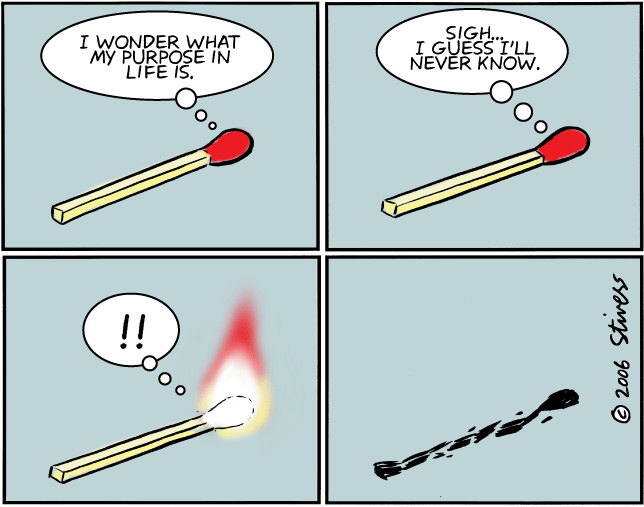
So where to start this mapping of the territory, this description of the taste of an orange? The obvious first post would be on the Buddha himself.

Of course, that enterprise is fraught with danger. As Karen Armstrong wrote in her excellent biography of the Buddha:

Some Buddhists might say that to write a biography of Siddhatta Gotama is a very un-Buddhist thing to do. In their view, no authority should be revered, however august; Buddhists must motivate themselves and rely on their own efforts, not on a charismatic leader. One ninth-century master, who founded the Lin-Chi line of Zen Buddhism, even went so far as to command his disciples, "If you meet the Buddha, kill the Buddha!" to emphasize the importance of maintaining this independence from authority figures. Gotama might not approved of the violence of this sentiment, but throughout his life he fought against the cult of personality, and endlessly deflected the attention of his disciples from himself. It was not his life and personality but his teaching that was important. He believed that he had woken up to a truth that was inscribed in the deepest structure of existence. It was a dhamma; the word has a wide range of connotations, but originally it denoted a fundamental law of life for gods, humans and animals alike. By discovering this truth, he had become enlightened and had experienced a profound inner transformation: he had won peace and immunity in the midst of life's suffering. Gotama had thus become a Buddha, an Enlightened or Awakened One. Any one of his disciples could achieve the same enlightenment if he or she followed this method. But if people started to revere Gotama the man, they would distract themselves from their task, and the cult could become a prop, causing an unworthy dependence that could only impede spiritual progress.

And that says quite a lot right there. I would strongly encourage anyone who is curious about this man, Siddhatta Gotama, to first be careful not to confuse the teacher with the teaching, and then to go and read Armstrong's Buddha.

But as Armstrong points out, Buddhism is not based on Buddhism the way, say, Christianity is based on the Christ; in fact, I bet that Gotama would be quite disappointed to learn that we were calling the dhamma "Buddhism."

Buddhism is about the here and now, your here and now, your life, you. It might as well be called "Insert-Your-Name-Here-ism." As my teacher recalls his teacher saying, "Your enlightenment will be a thousand times greater," because it's not something that others are experiencing, it's happening to you.

By the way, the "Kill the Buddha" teaching is widely misunderstood. My interpretation is that if you see something or someone, any one thing or person, and identify it as "Buddha," you are not recognizing the interconnectedness of all things. Everything is Buddha, so if you meet an individual "Buddha" it is just a manifestation of your own ignorance, and it's that ignorance that you're being exhorted to kill.

So you can put down that fat guy now.

Wednesday, August 30, 2006

First of all, happy birthday, Mom! Wanted to get that said if nothing else.

I realize after Monday night's debacle that part of the problem I had then, and occasionally have here as well, is in trying to articulate that which cannot be said. No, I don't mean I won't say it out of shyness, and I don't mean that I'm not allowed to say it. Some things simply cannot be said, cannot be put into words - for example, a baby's first real smile, or the look in a lover's eyes. The Zen experience is the same way - it is, almost by "definition," that which goes beyond words, beyond definitions. As a result, trying to put it into words is ultimately a frustrating mess.

However, you have to say something, as Katagiri says, and there seem to be two approaches that most people have used. One is to make the most direct possible statement, spoken from the heart. A monk told Joshu "I have just entered the monastery. Please teach me." Joshu asked, "Have you eaten your rice?" The monk said that he had. Joshu replied, "Then wash your bowl." At that moment, the monk was enlightened.

The problem with that approach is that the words are often misunderstood, and only make sense in a takes-one-to-know-one kind of way. In other words, what ever you think that story means is not correct (hint: it's not what you think that's important).

The other way is the long route, the road more traveled. On the long route, the history, the teachings, philosophy and religion are all expressed in the hope that by sketching out a map of the territory, the path will become apparent. The problem there is that the map of the territory so often gets confused for the territory itself.

How do you explain the taste of an orange to someone who's only eaten rice their whole life? You can use words like "sweet" and "tangy" and "citrusey" until you're blue in the face, you can use all kinds of analogies ("unlike anything you've ever tasted before"), but you still won't get the taste across. Or you can just give him an orange.

So, now that I've got the Live site under way and have an outlet for my more off-the-wall thoughts and brain farts, I'm going to attempt something new here: a long detailed map of the territory (no Zen Master I, I'm afraid most of my direct statements have been lost, missed or misunderstood).

This will take a while, because I can't possibly sketch out the map in one, two or even twenty entries (well, maybe twenty), but at least I'll never be at a loss for a topic to blog about. Occasionally, I'll give myself (and you) a break and speak directly again when there's a direct statement that needs to be made ("Have an orange, George Bush"), but meanwhile, let me try my hand at cartography.

And if that bores you, then go Live.

Tuesday, August 29, 2006

I'm not complaining, but last night was a strange one at the Zen Center.

Those of you unfamiliar with Zen Buddhism might be under some impression that every night there is strange and mysterious, and while in a manner of speaking they are, or at least all unique and unparalleled, the services can actually be quite ordinary and normal. Just a bunch of people sitting on cushions, facing the wall.

A vicious thunderstorm had ripped through Atlanta earlier that afternoon, snarling traffic and flooding streets, so I suspected that attendance might be down as I drove over. My suspicions did not let me down. And to top it off, I already had some sort of sore throat, and the wet weather just made me feel worse.

A single, solitary person was waiting when I arrived. I did not recognize him, but he told me that he had been there before and did not need any beginner's instruction. Shortly afterwards, a young couple arrived and said that it was their first time visiting, and that they would appreciate an orientation.

No problem, I've done this before. My plan was to let them observe the start of the service, the chanting and the bows, give them a quick orientation during the first meditation period, and then have them join the rest in meditation for the second sitting period. It would keep me pretty busy and wouldn't allow me much time for my own meditation, but then again I'm there to be of service to others anyway, not for the sake of my own sitting.

By the way, the wife was a full nine months pregnant, and ready to deliver any day. Not that there's any trouble with that, but I had never really considered before how to give instruction on cross-legged sitting posture to someone so ripe she looked ready to burst. I told them to come on in to the meditation hall and join us in the chant, and when the first meditation period started not to sit down, but to wait for me to lead them out of the room for newcomer's instruction.

I usually don't give instructions on the chanting as it's pretty intuitive - the words are printed on a card and once the others join in on the chanting, newcomers usually pick it up and chant along. The problem was that once we got started, it was obvious that the other guy who had arrived was also a complete novice and had no idea of what to do. He didn't rise when the starting bell rang, so I had to announce, "Please rise and join us in the chanting of The Great Heart of Perfect Wisdom Sutra." (We generally try to maintain silence during our services and use bells, gongs and such as cues on what to do, but when the congregants are not responding properly, we have to resort to verbal instruction.)

So I had to tell the three of them every little detail of what to do - where to find the sutra cards, where to stand and so on, and after ringing the gong three times and invoking the title of the sutra, I instructed them, "All together now" as the sutra started, but no one joined in. I had to do the entire five minutes or so of the sutra solo, and with a sore throat at that.

After the chant, I said, "Please be seated for the first period of zazen" (I didn't even dare try to talk them through the prostration bows to the Three Treasures), hoping that the guy would then sit down and the couple remain standing like I had told them, but of course just the opposite happened - the couple tentatively took a seat while the guy just stood there, so I repeated, "Please take your seat on the zafu for the first period of meditation," and the guy finally got it and sat down and faced the wall, but the couple also thought I was talking to them, so they turned around and faced the wall as well.

No problem. After I saw that the guy had settled in, I arose and tapped the shoulders of the couple and waved for them to follow me. I escorted them to the newcomers room, and gave them the standard quickie orientation - when to bow, how to sit, remember to count your breath, and so on. The pregnant wife was a good sport and did her best at the posture. We didn't have time to get into any of the intellectual matter, and when she asked, "What's the point of doing all this, anyway?," I just told her to hold that question until after the service, and let's go back to the meditation hall now, since it's time for the end of the first period, and I need to let the guy sitting in there alone know that it's time to get up for walking meditation.

Except that as we headed back, we ran into the guy as he was leaving. He shot me a "You forgot about me and left me all alone in there" look, and I said "We were just coming back for you," but he had already crossed the point of no return and headed out the door.

It took me a few minutes in the meditation hall with the couple to realize that there was no longer a service in progress to join, and therefore we could continue their orientation and instruction. Which is what we did, and I even had them sit for a short 10 minute period just to get a feel for the experience.

After the sitting, they were full of questions, things like "What if there were two enlightened teachers and they both said opposite things, how would you know which one to believe?" I tried to explain that Zen emphasizes the here and now and that the question was hypothetical and imaginary (without saying that exactly that kind of thing happens all of the time), and not to worry about "what if?" scenarios, but instead look at how they were feeling, right there, right then. "Yes, but. . . " would come the replies, and sooner or later I started to get sucked into the hypothetical and theoretical too, and probably wound up confusing them more than I helped.

We stayed and talked for over an hour, until the wife was looking visibly uncomfortable and I suggested that it was perhaps time to go. She took me up on the offer, and the two left shortly afterwards.

After they were gone and I was closing up the zendo, I heard some noise in the backroom and went to investigate. It turns out that Terry, a senior teacher and head cook (a very important role) had been there the whole time, even though I had thought that we were alone. Terry and I talked for another hour or so, and I did not get home until almost 11:30.

Strange night. . . but again, I'm not complaining. Things don't always go the way that you had planned or even expected them to go, so the best that one can do is just observe and enjoy the show. There are no "typical" days, and every minute is exceptional and unprecedented - you just need the willingness to see it.

There are no ordinary moments.

Saturday, August 26, 2006

The other day, I received an email from Dr. Miguel Munoz-Laboy concerning my criticism of his work on the importance of understanding culture and the social context of the lives of young men. He included a transcript of the actual talk that he gave and on which my criticisms were based.

I responded with the following email to Dr. Munoz-Laboy:

Thank you for your patient and clarifying comments on my uninformed "analysis" of your research. Unfortunately, I only encountered your work in the popular press, and misunderstood it to be a causational analysis of the relationship between pop music and sexual behavior. I now understand, as your transcript clearly states, that your research was more ethnographic than moralistic.

A few weeks ago, a story was carried by the AP that claimed that teens who listened to music with raunchy, sexual lyrics start having sex sooner than those who preferred other songs. The August issue of Pediatrics reportedly contained research that contended that music's influence on teen behavior appeared to depend on how sex was portrayed - songs depicting men as "sex-driven studs," women as sex objects, and with explicit references to sex acts were more likely to trigger early sexual behavior than those where sexual references were more veiled and relationships appeared more committed.

The verb 'trigger' in that last sentence caused me concern, as it clearly implied a causal relationship between song lyrics and subsequent behavior. I discussed this issue in my blog, basically concluding that the tendency to accuse hip-hop music of causing negative behavior was ultimately rooted in racism. I continued this theme in my August 11 entry.

When I came across an article in the press on August 19 discussing your paper, I immediately jumped to the conclusion that your work was more of the same content against which I had been arguing. I see now that, in fact, your work actually reinforces my intuitive belief - that young people use various genres of popular music, along with clothing, slang and behavior, as a form of almost "tribal" identification. As I understand your point (and I may still be off base, since I am, after all, a Zen Buddhist environmentalist with only a layman's understanding of sociology), interpreting these identifications can give public health workers a clearer understanding of the cultural background of young persons, including their likely sexual behaviors.

Again, thank you for correcting my misinformed remarks and thank you for sharing your transcript with me.

Sincerely,

Shokai

Thursday, August 24, 2006

This is cool - I pass this snowcone truck ("Orleagian Snowballs") at the corner of Piedmont and Monroe every week on my way to Monday night zazen, among my other travels. I've even stopped to get one once or twice (although they're just as often closed - they're a little inconsistent in their hours). Anyway, the picture above was in today's New York Times, part of an article on how much better New Orleans exiles are doing in Atlanta than in, say, Houston. It's a bit surprising to see your local eccentric vendor in the Journal of Record.

Today, I did my part for Atlanta to be doing a little better. Tanyard Creek, a tributary to Peachtree Creek that flows about two blocks from my house, drains a large urban catchment and is subject to frequent flooding. All that pavement, no infiltration - you know the story. And when it floods, it washes down copious amounts of trash with the floodwaters, leaving it in the branches of the trees on its banks and on the grass in the park it flows through.

This morning, I took another vendor (not the snowcone guy, but someone different) who installs trash filters into stormwater manholes to the creek, and showed him a place where the streamflow narrows into one little spout, and asked if he could design a filter to catch the trash washing down the stream that would fit that spot.

He said he could, and liked the idea of trying something different. In fact, he's willing to design it, build it and install it at no cost (he's a good guy), provided the neighborhood assist with the maintenance and clean-out. I told him I'll find volunteers to do that (we're good people, too). Of course, we need to sell our scheme to the city watershed department, but I can't imagine that they would object to a plan that would solve a problem with no expense or effort from them.

Citizens all too often want to blame others for environmental problems, and demand that industry or government solve their problems for them. With this effort, I want to get grass-roots involvement in cleaning up at least one stream and, hey, if it works, we can try this technology out in other streams as well (which is what the vendor is hoping for with his promotional give-away).

There are some real challenges ahead in making this work - finding the volunteers, the actual design, getting the city's permission, site access issues, and so on. But they are the kind of problems that seem solvable if we put our head down and don't cop a defeatist attitude.

On paper, at least, this should work.

Wednesday, August 23, 2006

I attended a Neighborhood Coalition meeting tonight concerning the Atlanta Beltline (There! I've said the Project That Shall Not Be Named!). The Beltline is a transit proposal for connecting some 22-odd miles of unused railroad tracks around the city to create a multi-use ring of mass transit, trails and greenspace around the inner core of the city, and will pass within about a block of my house.

Except that it has now been announced that MARTA, the Atlanta rapid transit authority, has decided that it's more cost effective to run buses along the Beltline that streetcars or light rail, and since the tracks within a block of my house aren't exactly "unused" (they're a principal trunk line for a major railroad), the buses will run along the city streets in my neighborhood.

So instead of getting a traffic-relieving alternative to the automobile in our neighborhood, we'll be instead getting more congestion on our already overburdened roads as the Beltline buses come rumbling down the street.

The reality of things rarely turns out like what we anticipated. But rather than getting gloomy and cynical over this, I can find some solace in that the reality of the bus-clogged streets will probably not be anything like I'm currently anticipating. And since the Beltline project has an estimated 25-year construction phase, will I even be around to see it? (I've been told that I'm going to die in 2033 at the age of 79).

No use worrying about the future. Take care of right now.

Tuesday, August 22, 2006

Some Thoughts

"Daring to live means daring to die at any moment, but also means daring to be born, crossing great stages of life in which the person we have been dies, and is replaced by another with a renewed vision of the world, and at the same time realizing that there will be many obstacles to overcome before we reach the final stage."
- Arnaud Desjardins

According to Wikipedia, humans, or human beings, are "bipedal primates belonging to the mammalian species Homo sapiens (Latin for 'wise' or 'knowing' man) under the family Hominidae (the great apes)." Humans can be distinguished by their highly developed brain capable of abstract reasoning, language and introspection. This, combined with an erect body carriage that frees their upper limbs for manipulating objects, has allowed humans to make greater use of tools than any other species.

I'm a human, and chances are that if you're reading this, you're a human, too.

Humans (and often other animals as well) are variously said to possess consciousness, self-awareness and a mind, which correspond roughly to the mental processes of thought. The mirror test asks whether animals have self awareness by determining whether they are able to recognize themselves in a mirror. Such self-recognition is said to be an indicator of consciousness. Humans (older than 18 months), great apes (except for gorillas), and bottlenose dolphins have all been observed to pass this test.

In addition to consciousness, however, humans are also said to possess the ability to discriminate a difference between themselves and their environment. The extent to which the mind constructs or experiences this discrimination, the passage of time and free will is a matter of some debate.

It is maintained by some religions and other factions that the universe itself is nothing but consciousness. The "consciousness-only" school of Buddhism maintains that all existence is simply consciousness, and therefore there is nothing that lies outside of the mind. This means that conscious experience is nothing but false discriminations or imagination; thus, the notion of consciousness-only is an indictment of the problems engendered by the activities of consciousness.

Embedded at the heart of Buddhism, there lies a seeming paradox. In contrast to the Brahmanic teachings of the Upanishads, the Buddha stated quite clearly that the self (atman) is an illusion, and thus there is no soul (anatman). However, there is transmigration (samsara) from one body to another. This poses a difficult question: "If there is no soul, what is it that reincarnates?"

The consciousness-only school resolves this paradox by explains that the conception of "self", the illusory atman, is produced from underlying "seeds." The seeds have a natural affinity to join together and when this happens, consciousness arises. Actions in this world, good, bad and neutral, affect (or "perfume") these seeds. The seeds then produce new seeds, with some seeds tainted by our actions, and others unaffected. Even after death, the impressions resulting from our acts linger on in the seeds. Since the seeds have a natural affinity to join together, reincarnation occurs when seeds fuse and new states of consciousness (delusions of "self") form, carrying with them the karmic history, just like DNA is carried on in living seeds.

A Buddha is someone who has managed to obliterate all impressions of himself, all perfumings of the seeds, and escape the wheel of samsara. Such consciousness, fully cleansed of karmic sediment, is known as "pure consciousness."

Still with me? Good. The question, then, is in the consciousness-only school, can a Buddha be said to have self-awareness, and is pure consciousness different enough from ordinary consciousness that it can be considered a whole other thing? If so, then is a Buddha "conscious" of being human, and is he even a human being ("wise" or "knowing" man) or the next evolutionary step, say, "enlightened" man (Homo tathagatha)?

Monday, August 21, 2006

I don't know what it's supposed to look like when a flat-screen monitor dies, but I think I saw it earlier today.

Coming home from work, I kicked on the computer while talking to a friend on the phone. The computer itself rattled and hummed as it usually does on start-up, but the monitor just took on an eerie green glow, flashed some weird lights, and then went black. No signal. Nothing.

I tried rebooting the computer, I turned the monitor on and off, but no improvement. It's dead, and not even a year old.

Welcome to Shokai's house of dysfunctional electronics.

If only I had a monitor I could rely on, I thought, but we all have these "If only. . . " thoughts often. "If only I had more money," or "If only I were more popular," or even as mundane as "If only I had a different flavor yogurt." There thoughts inevitably end, "then everything would be better."

Our minds always seem to want to have things different than the way they are. In fact, those moments when we are perfectly satisfied with everything - our selves, the world, our feelings - are usually so rare most of us could count those "perfect" moments on one hand.

But it's all in the way that we look at things. If we didn't crave what we don't have, leaning toward that which gives us pleasure and away from the unfamiliar and unpleasant, we might always be satisfied with the here and now.

So, you ask, am I satisfied with a dead monitor? Well, no. . . but you're reading this now, aren't you, so I must have figured out something. It turns out that I have an old monitor that I keep in the zazen room, a remnant from the day my old computer crashed, and it took me less than 5 minutes to replace the dead flat-screen with the old CRT. Is the old CRT as good as the flat-screen? Well, no, but only because my mind wants the image to look precisely the way I was used to seeing it, and my ego-pride wants to have the newest and coolest accessories on my desk top. But functionally, an old CRT is better than a dead flat-screen.

It's like this with a lot of things. As we look, we see that our discriminating mind is constantly picking and choosing, and while that's not necessarily wrong (it's the human condition), it's also the cause of our discontent and our suffering (also the human condition, see The First Noble Truth).

We had eight people for Monday night zazen tonight - a good turnout. But the pretty girl who came early also left early, and I had wanted her to stay. And others arrived late when they were supposed to be on time (according to me), and still others weren't sitting properly - all fidgets and poor posture. So instead of enjoying the presence of others to sit with, part of my mind wanted to "correct" everything - until I saw that I was just caught once again in "If only . . ." ("If only everyone arrived and left on time, if only they sat in the right posture without moving, then everything would be perfect"). And once I saw that, and was able to let go of it, then, in fact, everything was perfect, and now I can blog about it using my perfect old CRT.

Sunday, August 20, 2006

A while back, I ran across the blog of someone I had met on line. We shared a couple of telephone conversations, including one rather longish talk, but never met in person and that was about the extent of our involvement with one another. No hard feelings, but I think we both arrived at the conclusion that we weren't quite right for one another.

Regardless, there was one thing that she said in her blog that I found particularly interesting, and I have taken the liberty of quoting as follows:

"I've come to realize that for me dating is a lot like traveling to a foreign land! It is about meeting new people, making new friends, exploring other cultures, being open to new beliefs, and connecting with other intellectuals. It is far less about romance, though that is a goal, it is a byproduct of the rest.

"If we all looked at dating like this rather than as a job interview (which it can sometimes feel like!), we might come away with an expanded circle of friends and increased wisdom rather than just another two hours with a stranger. Finding others to connect with is often clouded by inappropriate expectation and even a bit of dread about what the "date" may hold. Better to advance with an open heart, an open mind, and open eyes and come away with the unique gifts each individual brings."

She had posted this several months before our conversations. However, this idea and attitude have stuck with me ever since, and if nothing else, our brief and "virtual" date opened my mind to a healthier way of looking at the dating experience - not as a "pass/fail" test but as an opportunity to increase one's own horizons.

Friday, August 18, 2006

Here we go again. . .

Researchers who tried to decipher the complex behaviors and attitudes of young men in the United States said that musical tastes may offer clues to rates of HIV infection. According to their study, boys hooked on gospel, techno and pop are more at risk of HIV infection than devotees of other musical styles, including hip hop.

Hundreds of young men interviewed in New York this year reportedly told lead researcher Miguel Munoz-Laboy of Columbia University that images of scantily-clad women in submissive roles in hip hop music videos had a "real impact on their lives."

"There is a connection. You see it in the way people dance, dress and it has an impact on their sexuality," said Munoz-Laboy. "We often blame youth for their behavior without understanding it," he said. "(But) there is a complex story about sexuality, masculinity and culture here."

Fortunately, the study did not imply listening to certain types of music caused HIV infection, but simply found links between genres and risk factors. The researchers looked at three New York neighborhoods and interviewed boys aged 16 to 21 about their listening tastes and attitudes toward condom use and sexual activities.

There is always a straight line between two dots. If all that the researchers looked at was, say, preferences in toothpaste and attitudes toward condom use and sexual activities, they would have found some correlation. "Crest has been shown to be an effective decay-preventing dentifrice when used in a conscientiously applied program of oral hygiene and regular professional care, and its users tend to be more likely to use condoms and practice safe sex," they might have concluded.

It's sad that the study did not choose to look at a broader range of issues than musical tastes to understand the "complex story" they alluded to. Did they consider education, parental presence or absence, history of drug and alcohol abuse, or other factors, or did they just ask, "Do you like hip hop or techno? Do you use condoms?"

The behavioral analysis divided participants into two musical groups: hip hop, reggae, reggaeton, rap and rhythm and blues; and rock, heavy metal, pop, techno, electronic and gospel. "Kids would be appalled that we grouped them this way, but this is how they mapped out in the mathematical analysis," Munoz-Laboy said. It probably also made the statistical analysis match their predetermined results much better, too.

Researchers distinguished between two styles of hip hop: the "bling, bling" hip hop that values fancy cars, money, and many girlfriends; and supposedly "real" hip hop that tells of urban youth stricken by violence, poverty and drug abuse. They found that boys who listened to hip hop music were more likely to have vaginal intercourse and had more partners, but boys from church or New York club scenes (techno, pop, electronic) took the most sexual risks. "Boys who listened to hip hop had more sex and more partners, but it did not impact condom use," said Munoz-Laboy. "Those who are part of religious culture or the club scene used condoms inconsistently."

It's sad what passes for "science" these days. . .