Thursday, September 25, 2008

Tuesday, September 23, 2008
The Ananda Talk
 For those who've asked, here are the notes from Sunday's dharma talk:
Ananda was a member of the caste of warrior-nobles in the City of Rajagritha; his father was Lord Kokuhan (“He Who Is As A Valley Stream”). Ananda was, in fact, the World-Honored One’s cousin and he was born on the night that the Tathagatha realized enlightenment. His name means “He Who Is A Delight” or “He Who Is A Joy.” His classically handsome form and face were without equal in any of the Sixteen Nations of India and everyone who saw him was filled with joy and delight, whence came his name. If you were casting a movie of his life, you'd have to choose, say, Jude Law to play Ananda.
He was unsurpassed in learning as well as quick in memory and bright, to say nothing of being highly esteemed for his broad learning. For twenty years he was the Buddha’s attendant; there was nothing that the Buddha had preached which he could not repeat for he constantly studied how the Buddha deported himself. Ananda had heard all of what the Buddha had taught and was quite erudite; many were the times when the Buddha personally expressed his approval of him even though he had not clarified what the foundation of his mind was.
The other disciples all said, “As the Buddha’s attendant, Ananda heard more of what the Buddha said than any other and has thoroughly retained it; it is just as if it were water that has been poured from one vessel into another without a drop being spilt." After the Buddha’s death, upon the request of the other disciples, Ananda recited all of the sacred teachings, beginning, “Thus have I heard: once when the Buddha was residing at. . ." After he had repeated all the teachings from the Buddha’s lifetime, the other disciples said that his proclamations did not differ from what the Tathagatha had taught even by as much as a single word. They were all in agreement that they could not tell whether it was the Tathagatha come back again or Ananda preaching. What Ananda proclaimed is, even now, the flowing forth and passing on of what the Tathagatha had preached.
However, one day Ananda bowed down to the feet of the Buddha and admitted, “I have not yet attained perfect Emancipation from arbitrary conceptions of phenomena since becoming a disciple is because of my pride in being known as thy favorite cousin and because of my exceptional learning."
One day, a non-Buddhist visited the congregation and said to the Buddha, “I do not ask for words; I do not ask for silence.” The Buddha just sat quietly.
The non-Buddhist said admiringly, “The compassion of the World-Honored One has opened the clouds of my delusion and has enabled me to enter the Way.” Making his salutations, he departed. Ananda, who as always was standing nearby, then asked the Buddha, “What was it this non-Buddhist realized, that he so praised you?”
The World-Honored One replied, “A good horse moves even at the shadow of the whip.”
On another occasion, Ananda said: “Today when we left town, I saw a most unusual thing.”
The World-Honored One asked, “What unusual thing did you see?”
Ananda said, “When we entered the town, I saw a bunch of musicians dancing. Upon leaving the town, I saw that they had all vanished.”
The World Honored One said, “Yesterday, I also saw an unusual thing.”
Ananda said, “I wonder what unusual thing the World-Honored One saw.”
The World-Honored One said, “When I entered the town I saw musicians dancing. Leaving the town, I again saw musicians dancing.”
The World-Honored One and Ananda both saw the unusual. Although the musicians were the same, their existence and disappearance were different. Zen Master Dogen once said that if someone were to ask him, “Teacher, do you also see an unusual thing or not?,” he would answer, "I do not leave or enter the town, and I do not see musicians dancing, but I also see that there is an unusual thing." If someone were to ask, “Teacher, what unusual thing do you see?,” he would have said, "Yesterday there was leaving and entering of inhaling and exhaling. This morning as well, there is this leaving and entering."
The World Honored One said to Ananda, “It is getting close to mealtime. You should go to town with the begging bowl.” Ananda accepted his request.
The World-Honored One said, “When you go begging with the bowl, you follow the manner of the Past Seven Buddhas.” Ananda asked, “What is the manner of the Past Seven Buddhas?”
The Buddha said, “Ananda!”
Ananda said, “Yes, Master.”
The Buddha said, “Go begging.”
On another occasion, Ananda asked Mahakasyapa, “Senior brother, besides the golden brocade robe you have received, have you received anything else?”
Mahakasyapa called out, “Ananda!”
“Yes, Master.”
Mahakasyapa said, “Take down the flagpole in front of your temple gate.”
Ananda had a great realization.
Later, Mahakasyapa asked Ananda, “Which single verse gave rise to the thirty-seven elements and all the teachings of the Buddha?”
Ananda said, “Not performing any evil, respectfully practicing all good, purifying one’s own mind, this is the teaching of all Buddhas.”
Mahakasyapa agreed.
Saturday, September 20, 2008
4 RENT: 2 BD, 2 BA CONDO. HRDWD FLRS.

 After finally evicitng the former non-paying tenants and restoring all of the extensive damage done by their children, the unsellable condo in Vinings is finally once again available for rent. I've had it listed for over a week now.
So far, I've received a grand total of one telephone calls about renting the property - from an out-of-state woman with a child screaming in the background who said she wanted it late next month and asked if I accepted Section 8 financing.
With all of the recent foreclosures, I thought finding a tenant would be more successful by now, but I see that it's going to be more work than I had anticipated.
Thursday, September 18, 2008
Why Did The Chicken Cross The Road?
 BARACK OBAMA: The chicken crossed the road because it wanted change! It saw that it is time for change!
JOHN McCAIN: My friends, when I was a captive of the Viet Cong, they fed us nothing but rice and grubs. I waited five-and-a-half years for that chicken to cross the road so that I could have something to eat!
SARAH PALIN: I told Congress "Thanks, but no thanks" to that chicken from the other side of the road.
HILLARY CLINTON: I remember when I was First Lady and personally helped that little chicken cross the road. I can still hear the sound of the sniper's bullets ricocheting around me as I guided that little chicken across the dangerous road!
GEORGE W. BUSH: We don't really care why the chicken crossed the road. We just want to know if that chicken is on our side of the road, or not. That chicken is either against us, or for us. There is no middle ground here.
DICK CHENEY: Where's my gun?
COLIN POWELL: Now to the left of the screen, you can clearly see the satellite image of the chicken crossing the road.
OLD MAN: In my day we didn't ask why the chicken crossed the road. Somebody told us the chicken crossed the road, and that was good enough for us. Hey Cheney, watch where you're pointing that gun! Aieeee, my face, my face!
BILL CLINTON: Whether or ont I crossed the road with that chicken depends on what your definition of chicken is.
AL GORE: I invented the chicken.
JOHN KERRY: Although I voted to let the chicken cross the road, I am now against it! It was the wrong road to cross, and I was misled about the chicken's intentions. I am not for it now, and will remain against it.
AL SHARPTON: Why are all the chickens white? We need some black chickens.
DR. PHIL: The problem we have here is that this chicken won't realize that he must first deal with the problem on this side of the road before it goes after the problem on the other side of the road. What we need to do is help him realize how stupid he's acting by not taking on his current problems before adding new problems.
OPRAH: Well, I understand that the chicken is having problems, which is why he wants to cross this road so bad. So instead of having the chicken learn from his mistakes and take falls, which is a part of life, I'm going to give this chicken A NEW CAR so that he can just drive across the road and not live his life like the rest of the chickens!
ANDERSON COOPER: We have reason to believe there is a chicken, but we have not yet been allowed access to the other side of the road.
NANCY GRACE: That chicken crossed the road because he's guilty! You can see it in his eyes and the way he walks.
SARAH PALIN: What's the difference between a pit bull and a chicken? Lipstick! No, wait a minute. . .
PAT BUCHANAN: To steal the job of a decent, hardworking American.
MARTHA STEWART: No one called me to warn me which way that chicken was going. I had a standing order at the Farmer's Market to sell my eggs when the price dropped to a certain level. No little bird gave me any insider information.
DR. SEUSS: Did the chicken cross the road? Did he cross it with a toad? Yes, the chicken crossed the road, but why it crossed I've not been told.
ERNEST HEMINGWAY: To die in the rain, alone.
JERRY FALWELL: Because the chicken was gay! Can't you people see the plain truth? That's why they call it the other side. Yes, my friends, that chicken is gay. And if you eat that chicken, you will become gay, too. I say we boycott all chickens until we sort out this abomination that the liberal media whitewashes with seemingly harmless phrases like the other side. That chicken should not be crossing the road. It's as plain and as simple as that.
BARBARA WALTERS: Isn't that interesting? In a few moments, we will be listening to the chicken tell, for the first time, the heart warming story of how it experienced a serious case of molting, and went on to accomplish its lifelong dream of crossing the road.
JOHN LENNON: Imagine all the chickens in the world crossing roads together, in peace.
SARAH PALIN: I thought that fancy-pants chicken from the other side of the road was a little over the top, so I sold it on eBay.
BILL GATES: I have just released eChicken 2008, which will not only cross roads, but will lay eggs, file your important documents, and balance your checkbook. Internet Explorer is an integral part of eChicken 2008. This new platform is much more stable and will never crash or need to be rebooted.
COLONEL SANDERS: Did I miss one?
ARISTOTLE: It is the nature of chickens to cross the road.
ALBERT EINSTEIN: Did the chicken really cross the road, or did the road move beneath the chicken?
ZEN MASTER DOGEN: There is no chicken, there is no road. There is only crossing. Please consider this carefully.
Tuesday, September 16, 2008
The Flagpole
 Looking a little bit deeper into the transmission from Mahakasyapa to Ananda: Back in the day, when a dharma discourse or lecture was being given, a flag would be raised in front of the temple gate. When the lecture was over, the flag would be taken down.
One day, Ananda asked Mahakasyapa, "My elder brother in the Dharma, when the World Honored One transmitted his golden embroidered winter robe to you did he pass on anything else?"
Mahakasyapa called out, "Ananda!"
Ananda responded, "Yes, Master?"
Mahakasyapa said, ""Chop down the flag pole in front of your temple gate!"
In other words, the lesson was over after their brief exchange. Beyond "Ananda!" and "Yes, Master?," there was no need for more words.
"Ananda!," called out Mahakasyapa - direct and penetrating.
"Yes, Master?" replied Ananda, like an echo in the valley, a spark flying off from a flint. But if a single thought had risen, all would have been lost in intellect.
When Mahakasyapa said to chop down the flag pole, "lesson over," Ananda realized that Mahakasyapa was not calling Ananda's name and Ananda's replying was not an answer. Intimate and immediate, the valley does not know the echo.
Although he had a complete understanding and knowledge of the Buddha's teaching, Ananda still felt that there was an "Ananda" to somehow "possess" the Buddha's nature, that indeed there was even anything to receive. This delusion kept him from fully grasping the meaning of the Buddha's truth. When Mahakasyapa calls out to him, "Ananda!" and Ananda instinctively replies without a single thought arising, Mahakasyapa says, in effect, "That's it!" At that moment, Ananda recognized his true self and realized enlightenment.
To say any more about it would be to miss the point.
Sunday, September 14, 2008


Saturday, September 13, 2008


Wednesday, September 10, 2008
Short and Brutish
 From what I hear, no one can stand Jehovah Witnesses, which is part of the reason that I try to be particularly kind to them when they stop by my house. They, in turn, are not sure what to make of me.
Last Saturday, I invited them in to my living room and offered them tea (they declined). We talked about several things, but I eventually had to tell them I couldn't agree with their literal interpretation of the Bible. This lead to a discussion about evolution, and they were quite disappointed to hear that I considered myself a staunch Darwinian, and would not agree that Creationism was an equally valid scientific theory. Creationism may be considered a faith-based belief and I will grant them that, but it is not science.
The next day, one of them stopped by to deliver a book that he hoped would change my mind - "Life - How did it get here?, by evolution or by creation?" Still trying to be polite, I agreed to look it over with an open mind, although I must admit that I had a very strong suspicion which of the two choices the book would endorse. Let's take a look at the book, shall we?
It starts off with a lovely passage:
"Life is everywhere around us. It is evident in the humming of insects, the singing of birds, the rustling of small animals in the underbrush. It exists in the icy polar regions and in parched deserts. It is present from the sea's sunlit surface to its darkest depths. High in the atmosphere tiny creatures float about. Beneath our feet untold trillions of microorganisms are at work in the soil, making it fertile for the growing of green plants, which sustain other forms of life."But from this poetic intro, the book quickly takes a dark turn. By the next page, it riffs on the survival-of-the-fittest theme, stating:
"In the view of many who accept the theory of evolution, life will always be made up of intense competition, with strife, hatred, wars and death. Some may even feel that man may destroy himself in the near future."Really? Hatred and wars? Darwinian theory of natural selection does note the "intense competition" among species and among members of a species, but that does not necessitate hatred and wars. Evolutionists are painted with a sinister brush at the very outset of the book.
Also, why arbitrarily pick on those who accept the theory of evolution? Sounds a little random. Couldn't is also be said that it the view of many who enjoy smoking cigars, for example, life will always be made up of intense completion, with strife, hatred, wars and death? Or couldn't we say some who prefer classical music may feel that man may destroy himself in the near future?
In Chapter 2, the authors attempt to discredit evolution by citing supposed examples of scientists themselves disagreeing about evolution. Under the subheading "Evolution Under Assault," they quote a 1980 article in Discover by James Gorman. "The scientific magazine Discover," they assert, "put the situation this way: 'Evolution ... is not only under attack by fundamentalist Christians, but is also being questioned by reputable scientists. Among paleontologists, scientists who study the fossil record, there is growing dissent from the prevailing view of Darwinism.'"
The full quote, however, is provided on line in Alan Feuerbacher's "Research On The Watchtower" blog. The quote from the Discover article (by the way, Discover is not a peer-reviewed scientific journal), titled "The Tortoise Or The Hare?" actually said:
"Charles Darwin's brilliant theory of evolution, published in 1859, had a stunning impact on scientific and religious thought and forever changed man's perception of himself. Now that hallowed theory is not only under attack by fundamentalist Christians, but is also being questioned by reputable scientists. Among paleontologists, scientists who study the fossil record, there is growing dissent from the prevailing view of Darwinism.... Most of the debate will center on one key question: Does the three-billion-year-old process of evolution creep at a steady pace, or is it marked by long periods of inactivity punctuated by short bursts of rapid change? Is Evolution a tortoise or a hare? Darwin's widely accepted view -- that evolution proceeds steadily, at a crawl -- favors the tortoise. But two paleontologists, Niles Eldredge of the American Museum of Natural History and Stephen Jay Gould of Harvard, are putting their bets on the hare."So the "questioning" by "reputable scientists" is not about whether life evolved as opposed to being created as the book would lead you to believe, but about the timing and pace of the evolutionary processes. The book is already trying to mislead the reader, and we're only on page 15.
The next quote (same paragraph) is attributed to a Francis Hitching, "an evolutionist and author of the book The Neck of the Giraffe." However, Hitching apparently is no more "an evolutionist" than he is a "reputable scientist." According to Wikipedia, "J. Francis Hitching is a British author and dowser. His books often focus on paranormal phenomena." Again, according to Alan Feuerbacher:
"Research on Hitching turned up the following: Hitching is basically a sensational TV script writer and has no scientific credentials. In The Neck of the Giraffe he claimed to be a member of the Royal Archaeological Institute, but an inquiry to that institute said he was not. He implied in the "Acknowledgements" of The Neck of the Giraffe that paleontologist Stephen Jay Gould had helped in the writing of the book, but upon inquiry Gould said he did not know him and had no information about him. Hitching also implied that his book had been endorsed by Richard Dawkins, but upon inquiry Dawkins stated: 'I know nothing at all about Francis Hitching. If you are uncovering the fact that he is a charlatan, good for you. His book, The Neck of the Giraffe, is one of the silliest and most ignorant I have read for years.'"A review of his book on amazon.com notes:
"Hitching points to the gaps in the fossil record, and is foolish enough to claim that the fossil record is complete; that no more gaps will be filled. That was in 1982, just think how many important fossils have been discovered since then, including transitional whale ancestors and feathered dinosaurs. His dismissal of transitional fossils, particularly Archaeopteryx, makes no sense whatsoever. It is clear from Hitching's text that he himself does not understand biology well, which makes him poorly qualified to write about it for others. (I am a molecular biologist.) In addition, what he does manage to convey is hopelessly outdated. He says we have no understanding of how eukaryotes developed (actually, he didn't know the word 'eukaryote', meaning a cell with a nucleus). We now have quite a bit of info on how eukaryotes developed from the merger of prokaryotes (cells without a nucleus)."Hitchins is quoted twice in the Watchtower book, once on page 15 and again on page 16. Both quotes are attributed to the first dozen pages of his book. The amazon.com customer review of the book notes "the first four chapters of the book consist almost entirely of creationist arguments."
I really don't mean to sound too harsh on Mr. J. Francis Hitching, the Watchtower book, or the kind people who stopped by my house last weekend. They really were lovely people and evidently care about others enough to bother to come back to my house to provide me with a copy of the book free of charge, and here I am just trashing it. But their book is basically disingenuous and dishonest- after a near-poetic beginning about the abundance of life, it darkly insinuates that evolutionists see the world as competitive and hateful and warlike, and then try to suggest that they don't even agree among themselves - first by taking a quote from the popular press out of context, and then pretending the writings of a paranormal creationist represent those of the legitimate scientific community.
But what a gift! Now anytime I experience writer's block, I merely need to open their book and debunk in this blog the lies and half-truths they present.
This should be fun. In a competitive, hateful, warlike kind of way.
Tuesday, September 09, 2008
Chop Down That Flag!
 So remember Mahakasyapa? The one who smiled? The one who received the golden embroidered winter robe from the Buddha himself and along with it the true Dharma eye treasury and wondrous mind of nirvana? What did he do with this transmission that he received?
Well, it turns out that he, in turn, passed it on to Ananda. Ananda was Buddha's cousin and personal attendant, a constant companion to the Buddha throughout the World Honored One's life. Ananda was born on the morning that the Buddha realized his enlightenment and was subsequently present at every one of the Buddha's discourses and had a memory so prodigious that after the Buddha passed away, Ananda was able to recall every lecture and every discourse spoken over the Buddha's long career.
But knowing and even understanding the teachings of the Buddha is not the same as realizing them, and although it might seem natural for the first teacher-to-student transmission to have been from the Buddha to the ever-faithful Ananda, it was actually to that old ascetic Mahakasyapa. After the Buddha's final nirvana, Ananda subsequently attended to Mahakasyapa for 20 years.
One day, Ananda asked Mahakasyapa, "My elder brother in the Dharma, when the World Honored One transmitted his golden embroidered winter robe to you did he pass on anything else?"
Mahakasyapa called out, "Ananda," and when Ananda acknowledged him, Mahakasyapa said, "Chop down the flag pole in front of your temple gate!"
Upon hearing those words, Ananda awakened to his true self and received the true Dharma eye treasury and wondrous mind of nirvana. Legend has it that Mahakasyapa kept the golden embroidered winter robe and resides to this day in the Himalaya, waiting to present the robe to the future Buddha Maitreya.
As previously noted, Ananda knew all of the Buddha's teachings better than any of the other disciples, and had them all memorized. The other disciples had praised Ananda to Mahakasyapa, saying, "As the Buddha's attendant, Ananda heard more of what the Buddha said than any other and has thoroughly retained it. It is as if it were water that has been poured from one vessel into another without a drop being spilled."
But realization does not depend on mere knowledge and learning. Even if one is sharp of mind and keen of ear, able to hear, comprehend and retain all manner of books and sacred teachings, but is unable to penetrate their own true self, one will not realize true enlightenment.
The "flag pole" in front of Ananda's temple gate was his ego-self, or more precisely, his conception that he existed as an ego-self separate from the rest of the universe. Although he had a complete understanding and knowledge of the Buddha's teaching, he still felt that there was an "Ananda" who somehow "possessed" this knowledge and understanding. This delusion kept him from fully grasping the meaning of the Buddha's truth. It was only until Mahakasyapa, sensing that the moment was right, surprised him with the command to cut down the flag in front of his temple's gate that he finally was able to directly see his own true self nature.
Do not rest on mere understanding. Do not "get" this story.
- Posted by Shokai, who still waves a flag in front of his temple gate.
Thursday, September 04, 2008
Running
 It may be because I've finally realized how out-of-shape I've been getting or it may be as corny as being inspired by the recent Beijing Olympics, but I've started running again.
In my very early teens, I took up cross country as a fall sport, and the two-mile in track for the spring. I used to enjoy the routines of junior varsity running - lacing up the Adidas, stretching, heading for the track. Every day the coach would have tacked up a different set of instructions, and there was a certain passive pleasure in submitting to each day's regime, e.g., "Monday: 1 mile warm up, 4 880s, 8 440s, 4 220s, 1 mile warm down" (a speed workout), or "Tuesday: 2 mile warm up, 1 1-mile, 1 2-miles, 1 3-miles, 1-mile warm down" (a distance workout). For the uninitiated, the first number is the number of reps and the second the distance in yards or miles. But in my later teen years, after the hormones kicked into high gear and I discovered the pleasures of sex and drugs and rock and roll, I forgot about running.
I rediscovered the joys of jogging in my late 20s in Atlanta. The National Park Service maintains an excellent multi-use trail along the Chattahoochee River with "mileposts" every quarter mile ("quarter-mile posts?"). It's essentially a two-mile loop, with a half-mile lead in/out, for a total of three miles. No hills, other than a gently rolling stretch near the 1.5 mile mark. I got to the point where I was running the loop twice for a 5-mile workout, and really kicking it on the final leg back.
My interest came and went and came again, and I continued to run on and off during the years I was away from Atlanta. I would meticulously map out road courses by driving around, noting the quarter-mile marks on the odometer on my car. My distance stayed in the 3 to 4 mile range, but I got my average mile time down to under 7 minutes, then 6:30. Certainly not competitive times, but good enough to give a 30-something runner a workout. I ran these paces through the hills north of Albany, New York and through the streets of Pittsburgh, PA before moving back to Atlanta.
In my first years back in Atlanta and now in my 40s, I returned to the NPS course along the river and even ran a few 10K road races. But then, I somehow lost interest in running, and let my gym membership expire, and as I entered my 50s I got slower, got older and got rounder, and basically came to accept it.
Until last week. For reasons I can't explain, suddenly I was overcome with the desire to put on some sneakers and head back to the river (maybe it was catching a profile of myself in the mirror when I came out of the shower). I went to the 3-mile river course during a weekday afternoon, stretched a little, and started a slow jog along the old familiar path.
Oh. My. God. After the first half mile, I hit the wall and couldn't run any more. My lungs were burning, my sides were cramping and my legs felt like rubber. I walked another half mile and then started running again, even though I still hadn't fully caught my breath. I only managed a quarter mile that time. I then walked another half, ran another quarter and then walked all the way back to my car. I took a long nap that afternoon.
Last Labor Day, my legs having recovered from three days rest, I headed back to the trail, determined to do better. I manged to run three-quarters of a mile this time before I had to walk again. After walking another three quarters, I ran for a half mile, walked for a half, ran for a quarter, and then walked the final quarter back to my waiting car (I think that's three miles). Another long nap. That evening, as I sat cross legged for an hour during my Monday night Zen Service, my limbs felt like jello.
I'll head back out to the trail again this weekend. I will try to add a quarter mile to my initial run each time out - a mile next time, then one and a quarter, then one and a half, and so on until I'm running the whole three miles again. Slow and easy - get the distance down first and worry about the time later.
As a young man, I used to laugh at magazine articles I saw with titles like "Fitness Over Fifty," wondering why anyone would bother after 50? But now that I'm here, and now that I've started again, I can't imagine why not bothering.
Wednesday, September 03, 2008
Political Blog
Sometimes I sincerely wonder whether John McCain is really an actual presidential candidate or just some Comedy Central character playing a candidate for some sort of Borat-type mockumentary. My older readers might remember Pat Paulson basically doing this back in the 60s. In any event, I think we can all agree that his vice-president nominee is defiantly just a prank, a little light-hearted amusement to help us through a dramatic election year.
And, yes, posts like this are why I shouldn't blog about politics, especially late at night.
Monday, September 01, 2008
Gustav
 Although the situation could change at any time, it now appears that New Orleans and the Gulf Coast have been spared the kind of devestation they experienced in 2005 following Katrina.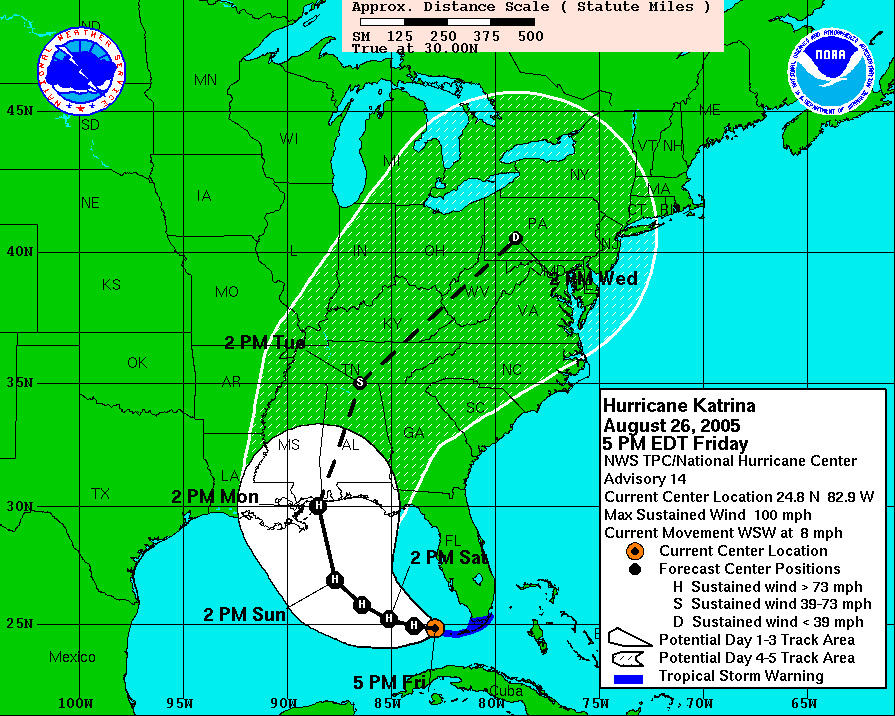
Let us all hope for the continued safety of the people affected by this storm. May their suffering be minimal.
Subscribe to:
Posts (Atom)
-
 If laughter makes you well, what if the well runs dry? - David Byrne, Office Cowboy Also, if whiskers on kittens is one of your favo...
 -
 It's 325 miles from Atlanta to Jekyll Island, or roughly the distance from Boston, Massachusetts to Wilmington, Delaware, but I made...