Thursday, February 24, 2005


The rain finally came last night and drenched the entire State of Georgia in a pounding storm, leaving the soaked ground too wet for anything other than the easy retrieval of earthworms by robins and cardinals.

It had better clear up by this weekend. It's time once again to lead the quarterly hike of Buddhists through the forest - this time we're off to Springer Mountain, the starting point of the Appalachian Trail (or ending, dependent upon your orientation). But first, I need to take a recon hike to scout the current parking situation, find good places to sit, etc. I'm planning on going this Saturday, weather permitting, for the reconnaissance, but the hike itself is in two weeks, so if I don't do the recon this weekend, I'll only have one more chance the following weekend. And Murphy's Law will dictate that if there's only one opportunity to go on the recon hike, it will rain on that one opportunity.

However, this weekend looks like it should have a fairly high overall potential for fun. Friday, I'm going to Variety Playhouse to see Donna the Buffalo with L. Traveling across the country in a 1960 tour bus, Donna the Buffalo has developed a fervent following and fans of all ages. Dubbed "The Herd," Donna's fanbase trails the band as they make their way from state to state. The band has performed at The Merle Watson Festival, Telluride Bluegrass Festival and The Newport Folk Festival. Funky and danceable with a message of tribal philosophy and celebration, Donna the Buffalo's music is a unique blend of reggae, rock, country, zydeco, cajun, and folk traditions. Donna's pointed lyrics issue moral challenges as their topic material moves effortlessly between political, historical, personal, and spiritual themes, with ideas of social and moral responsibility that spring from the band members core beliefs. The interchange of energy and emotion between the band and the fans turns each concert into an experience that actualize the ideas of community, responsibility, and celebration heard in the band's lyrics.

Or so I'm told.

Anyway, after the Saturday hike, L. and I are off to the Alliance Theater to see "The Guardsman" by Ferenc Molnar. "Ferenc," as I learned in Budapest, is a popular name in Hungary. The play is billed as a romantic comedy about the troubled, young marriage of a vain actor and actress. Sure to catch his wife cheating, the actor disguises himself as a soldier and courts her incognito. His gambit sets off a comedic chain of events with the moral that true love conquers all. László Marton directs.

Sunday, I'm heading back up to the Chattanooga Zen Center with my friend Arthur for their Sunday service.

So, that's my weekend: some music, some theater, some Appalachian Trail hiking, some Zen, and some time with the lovely L. It all looks good from here, and sure as hell beats out unstructured time.

Wednesday, February 23, 2005


Here it is, Wednesday, the middle of the week already and the second full moon after the winter solstice.

The days are getting longer. And warmer. It was a beautiful spring day today, mid 70s and sunny - the kind of "winter" weather that makes you glad you live in Atlanta.

Yesterday, as you could tell from the previous post, was L.'s birthday. I arranged for a bouquet of roses and lilies to be delivered to her at work, and bought her a Japanese vase as a birthday present. I offered to take her out to dinner at Bachannalia, but she wasn't feeling quite 100% and requested that we make it some other night when she felt better and could enjoy it more.

No problem.

Instead, we went to the movies and saw "Bad Education," the new Almodovar. According to IMDB.com, Almodovar attended a Catholic boarding school in the 1960s where some of his fellow students were abused by priests, although he asserts that he himself wasn't. However, he spent 10 years writing the script for "Bad Education," which is based upon a short story he wrote as an adolescent about his experience at boarding school. "Bad Education," then, is about the making of a fictional movie about the experiences of two former boarding school students. In the movie, the script was written by one of the former students and directed by the other. Not to give anything away, but obviously the clergy doesn't come out looking too good in the film.

But anyway, L. and I had a great birthday night together. We had spent some of Sunday afternoon together over lunch and shopping after the morning service at the zendo, and Monday she showed up at the evening service and we had dinner (take-out Thai) at her place afterwards. Saturday, I stopped over and helped her clean her place up for an office party she was hostessing.

As I'm writing, the rumble of thunder outside signals an approaching storm. I should have known this pleasant weather was too good to last.

Monday, February 21, 2005

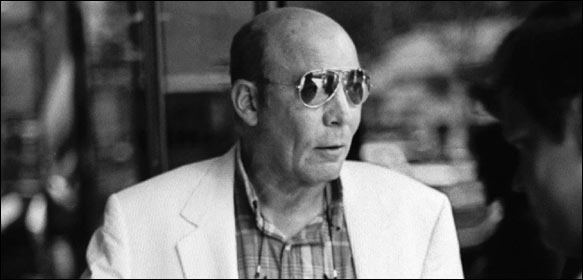
Hunter S. Thompson Was the Sandra Dee of My Generation


Hunter S. Thompson, the maverick journalist and author whose savage chronicling of the underbelly of American life and politics embodied a new kind of nonfiction writing he called "gonzo journalism," died of a self-inflicted gunshot wound at his home in Woody Creek, Colorado, yesterday afternoon. He was 65.

In order to maintain the karmic balance in the mortal world, and to compensate for the loss of Thompson's dark genius, the grim reaper also took out Sandra Dee, the actress who first played "Gidget" in the movies.


"It's a strange world. Some people get rich and others eat shit and die. A fat man will feel his heart burst and call it beautiful. Who knows? If there is, in fact, a Heaven and a Hell , all we know for sure is that Hell will be a viciously overcrowded version of Phoenix---a clean well lighted place full of sunshine and bromides and fast cars where almost everybody seems vaguely happy, except for the ones who know in their hearts what is missing. . . and being driven slowly and quietly into a kind of terminal craziness that comes with finally understanding that the one thing you want is not there. Missing. Back-ordered. No tengo. Via con Dios. Grow up! Small is better. Take what you can get. . .

Heaven is a bit harder to figure. And there are some things that not even a smart boy can tell you for sure. . . But i can guess. Or wonder. Or maybe just think like a gambler or fool or some kind of atavistic rock & roll lunatic and make it about 8-1 that Heaven will be a place where the swine will be sorted out at the gate and sent off like rats. With huge welts and lumps and puncture wounds all over their bodies. Down the long black chute where ugliness rolls over you every 10 or 16 minutes like waves of boiling asphalt and poison scum. Followed by sergeants and lawyers and crooked cops waving rule books. And where nobody laughs and everybody lies and the days drag by like dead animals and the nights are full of whores and junkies clawing at your windows and tax men jamming writs under your door and the screams of the doomed coming up through the air shaft along with white cockroaches and red stringworms full of AIDS and bursts of foul gas with no sunrise and the morning streets full of preachers begging for money and fondling themselves with gangs of fat young boys trailing after them. . .

Ah. . . but we were talking about Heaven. . . or trying to. . . but somehow we got back into Hell.

Maybe there is no Heaven. Or maybe this is all pure gibberish---a product of the demented imagination of a lazy drunken hillbilly with a heart full of hate who has found out a way to live out there where the real winds blow---to sleep late, have fun, get wild, drink whiskey and drive fast on empty streets with nothing in mind except falling in love and not getting arrested. . .

Res ipsa loquitur. Let the good times roll.

HST
Paradise Valley"

- excerpt from 'Author's Note,' Generation of Swine

Sunday, February 20, 2005

Top 10 Achievements of 2004


Okay, there's only eight, which seems somehow appropriate for this Darwin Awards-type list (except that no one dies in these) . . . .

1. WILL THE REAL DUMMY PLEASE STAND UP? AT&T fired President John Walter after nine months, saying he lacked intellectual leadership. He received a $26 million severance package.

2. WITH A LITTLE HELP FROM OUR FRIENDS: Police in Oakland, CA spent two hours attempting to subdue a gunman who had barricaded himself inside his home. After firing ten tear gas canisters, officers discovered that the man was standing beside them in the police line, shouting, "Please come out and give yourself up."

3. WHAT WAS PLAN B??? An Illinois man, pretending to have a gun, kidnapped a motorist and forced him to drive to two different automated teller machines, wherein the kidnapper proceeded to withdraw money from his own bank accounts.

4. THE GETAWAY! A man walked into a Topeka, Kansas Kwik Stop and asked for all the money in the cash drawer. Apparently, the take was too small, so he tied up the store clerk and worked the counter himself for three hours until police showed up and grabbed him.

5. DID I SAY THAT??? Police in Los Angeles had good luck with a robbery suspect who just couldn't control himself during a lineup. When detectives asked each man in the lineup to repeat the words: "Give me all your money or I'll shoot", the man shouted, "That's not what I said!"

6. ARE WE COMMUNICATING??? A man spoke frantically into the phone: "My wife is pregnant and her contractions are only two minutes apart". "Is this her first child?" the doctor asked. "No!" the man shouted, "This is her husband!"

7. NOT THE SHARPEST TOOL IN THE SHED! In Modesto, CA, Steven Richard King was arrested for trying to hold up a Bank of America branch without a weapon. King used a thumb and a finger to simulate a gun. Unfortunately, he failed to keep his hand in his pocket.

8. THE GRAND FINALE!!! Last summer, on Lake Isabella, CA, some folks new to boating were having a problem. No matter how hard they tried, they couldn't get their brand new 22-foot boat going. It was very sluggish in almost every maneuver, no matter how much power they applied. After about an hour of trying to make it go, they putted into a nearby marina, thinking someone there may be able to tell them what was wrong. A thorough topside check revealed everything in perfect working condition. The engine ran fine, the out-drive went up and down, and the propeller was the correct size and pitch. So, one of the marina guys jumped in the water to check underneath. He came up choking on water, he was laughing so hard. Under the boat, still strapped securely in place, was the trailer!

Saturday, February 19, 2005

On the Singular Strangeness of Japan


"Listen. God only exists in people's minds. Especially, in Japan, God's always been kind of a flexible concept. Look at what happened after the war. Douglas MacArthur ordered the divine emperor to quit being God, and he did, making a speech saying he was just an ordinary person."
- Haruki Murakami, "Kafka On the Shore"

A couple weeks ago, during the Atlanta ice storm, L. and I watched a DVD of Miyazaki's anime fantasy "Spirited Away." The movie is strange and wonderful, and evokes a world where ghosts and spirits, gods and monsters are not only accepted, but expected. The Radish Spirit, Noh Face and other supernatural beings come and go throughout the film to the surprise of no one, and certainly without the fear or even horror associated with supernatural beings in the West (can you imagine "Poltergeist," or even "Ghostbusters," with no one particularly interested in the fact that ghosts share the house with people?).

Much in "Spirited Away" seems very strange to Americans, just as much of Zen also seems rather strange. Where does this strangeness in Zen in particular and Japanese culture in general come from?

Much has been written about how Buddhism, when it arrived in China, encountered Taoism and eventually produced a kind of uniquely Chinese variant of Buddhism, called chan. Chan Buddhism later emigrated to Japan, where it became Zen. However, for all of the talk on how Buddhism incorporated the previously existing Chinese culture, I've read very little on how Chan adopted to Japanese culture when it came to the island, or even of the nature of that original Japanese culture.

So, with that in mind, I found the following passages of John Updike's review in a recent New Yorker of Haruki Murakami's new novel, "Kafka On the Shore," particularly interesting:

"The religious history of Japan since the introduction of Chinese culture in the fifth century A.D. and the arrival of Buddhism in the sixth has been a long lesson in the stubborn resilience and adaptability of the native cult of polytheistic nature worship called, to distinguish it from Buddhism, Shinto. Shinto, to quote the Encyclopedia Britannica, 'has no founder, no official sacred scriptures, in the strict sense, and no fixed dogma.' Nor does it offer, as atypically surviving kamikaze pilots have pointed out, an afterlife. It is based on kami, a ubiquitous word sometimes translated as 'gods' or 'spirits' but meaning, finally, anything felt worthy of reverence. One of Shinto's belated theorists, Motoori Norinaga (1730-1801), defined kami as 'anything whatsoever which was out of the ordinary.'

"A tenacious adherence to Shinto in the Japanese countryside and among the masses has enabled it to coexist for a millennium and a half with Buddhism, Taoism, and Confucianism, and to be subject to repeated revivals, most recently, from 1871 to 1945, as the official spiritual weapon in Japan's imperialist wars. After Japan's defeat in the Second World War, Shinto, under the direction of the Allied occupation force, was disestablished, its holidays were curtailed, and the emperor's divinity - based on the first emperor's purported descent from the sun goddess - was renounced. But Shinto shrines remain, in the imperial precincts and in the countryside; its rites are performed, its paper wish-slips tied to bushes, its amulets sold to tourists Asian and Western. Shinto's strong aesthetic component, a reverence toward materials and processes, continues to permeate the crafts and the arts. Kami exists not only in heavenly and earthly forces but in animals, birds, plants, and stones."

And there you have much of what is unique to Zen Buddhism - the devotion to the arts, the reverence of nature, and even the casual references Dogen makes to demons, to gods, and to hungry ghosts.

The "Spirited Away" DVD has been long since returned, but Friday night, L. came over with the DVD of "Donnie Darko," another rather fantastical, although very Western, movie. We watched the movie on my new sofa with a nice fire burning in the fireplace after we had enjoyed a good steak dinner at Bone's. For those keeping score at home, we got along fine on our first date following our breakup of last week.

Friday, February 18, 2005


A tourist walked into a curio shop in San Francisco. Looking around at the exotica, he noticed a very lifelike, life-sized bronze statue of a rat. It had no price tag, but it was so striking he decided he must have it.

He took it to the counter. "How much for the bronze rat?"

"Twelve dollars for the rat, one hundred dollars for the story," the owner said.

The tourist gave the shop owner twelve dollars. "I'll take the rat. You can keep the story."

As he walked down the street carrying the rat, he soon noticed that a few real rats had crawled out of the alleys and sewers and began following him. This was disconcerting, so he began walking faster. But within a couple of blocks, the herd of rats behind him had grown to hundreds, and they began squealing. He began to trot toward the Bay, but looking back he saw that the rats now numbered in the millions, were squealing ever louder, and coming toward him faster and faster. Now scared, he broke into a run, then a full Olympic sprint to the edge of the Bay where he threw the bronze rat as far out as he could muster.

Amazingly, the millions of rats all jumped into the Bay after the bronze rat, and they all drowned.

The man walked back to the curio shop.

"Aha!" said the owner. "You have come back for the story."

"No," said the man, "I came back to see if you have a bronze Republican."

Thursday, February 17, 2005

More Cayman Island Pics

Some more pictures from my November 2004 dive trip to Grand Cayman Island were sent to me today, this time taken by Darren:


Wednesday, February 16, 2005

Happy Kyoto Day


SEXUAL HARASSMENT IN THE WORKPLACE - Recently, I completed our corporate-required sensitivity training regarding sexual harassment in the workplace. One of the lessons they taught us was that women may feel uncomfortable or threatened (and hence, "harassed") if, when being addressed, one does not maintain eye contact but instead allows one's gaze to wander over their bodies.

Okay, fair enough. Let's look at some examples, shall we? Below, we see a picture of Hugo Chavez, the president of Venezuela, meeting with his countrypersons. See how Chavez maintains eye contact with the woman he's addressing? See how he's not distracted? Granted, he's using a hand on her shoulder to keep himself focused, but one has to admire his self-control.

Now, look at the bodyguard standing behind him. Look where his gaze is falling. That is why Hugo Chavez, a great Venezuelan, is the President of his country and the bodyguard is, well, only a bodyguard.


Now below, I offer you George W. Bush, who amazingly enough, was recently elected President of the United States after already serving one term. Notice Mr. Bush's lack of concentration. Notice his lack of discipline. See how he's so easily distracted? See how he cannot maintain eye contact?


If this were Venezuela, Mr. Bush would be only a bodyguard . . . .

Tuesday, February 15, 2005

Bidding a Soldier Farewell

By Alison Waldman
Published in the Asbury Park Press 02/12/05

NEPTUNE -- In the week following the death of Sgt. Stephen R. Sherman, family and friends gathered to share stories about the fallen soldier — some evoking laughter, others bringing tears.

"We Irish have long ago learned the healing power of stories," said the Rev. Brian Butch of Holy Innocents Roman Catholic Church.

At the memorial Mass Friday for the 27-year-old Neptune man who died Feb. 3 in Iraq, family, friends and even strangers gathered to share the story of Sherman's life. Through music, words, laughter and tears, they remembered Sherman and bid him goodbye.

Rev. Butch spoke of a young man with a sharp mind, good looks and a caring heart. A man who used his time and talents — from athletics to music — to help others. "He excelled in life," Butch said. "He reached out in love to so many people."

With a vision of a better world, one where faith could be practiced freely, Sherman went to Iraq, Butch said. "Stephen chose to go and bring light into a place of great darkness."

Sherman died near Mosul after a homemade bomb hit the vehicle in which he was traveling, according to the Army and his family.

He had enlisted in the Army in April 2003, completing basic and advanced individual training as a chemical operations specialist by the following October. He was deployed to Iraq a year later with his unit — the 1st Battalion, 5th Infantry Regiment, 25th Infantry Division out of Fort Lewis, Wash. — serving as a nuclear, biological, chemical noncommissioned officer.

While in Iraq, he developed a fondness for its children. When writing to the classes of his cousins, he would ask them to pray for the children of Iraq.

In their eulogies, Sherman's three younger siblings described a caring big brother who always looked out for them. He was a source of inspiration and encouragement, they said.

"Stephen did more in 27 years than most people do in 100," said his younger brother, Eddie, who shared a tale from a canoeing trip in Canada he took with Sherman. He said his brother carried a canoe for two miles and then returned to help others along the trail.

"He was my hero long before he suited up and went to war," said Danny, his other brother.

Sherman's youngest sibling, Caitlin, struggled through tears as she told the crowd of several hundred people that the real loss was for those who never knew her brother. "I will go on in life a stronger, better, more able person because I knew him," Caitlin said. "We were lucky."

Sherman's uncles, Tim and Terry Wildeman, followed their eulogies with a heartfelt performance of "Ripple" by the Grateful Dead, one of Sherman's favorite bands.

Some who came to Friday's service said they felt compelled to attend although they never knew Sherman. "We just wish that we had," said Cheryl Chando of the Normandy Beach section of Dover Township. Her son shared a class with one of his cousins, she said.

As the service drew to a close, mourners flowed out of the church into the cold, dark night, each carrying a lighted candle. They huddled together in silence as bag pipers played and Sherman's casket — draped with the American flag — was placed into a waiting hearse.

He will buried Monday in Arlington National Cemetery with full military honors.

Postscript - Sgt. Stephen R. Sherman was the nephew of a co-worker of mine - Shokai

Monday, February 14, 2005

Happy Lupercalia!

"This year the average consumer will spend approximately $97 on Valentine's Day, according to the National Retail Federation's Valentine's Day Consumer Survey. Total estimated spending is predicted to be $13.2 billion, which is up just over 1 percent from last year. The most popular gift given on Valentine's Day is a greeting card, followed by flowers, candy and an evening out." Source: Forbes.com

Every February 14, Valentine's Day is celebrated by giving flowers, candy and cards to lovers or those we hope to love. Even though Valentine's Day falls on February 14, the feast day of several Christian martyrs named Valentine in the third century A.D., its customs probably began eight hundred years prior to the establishment of Valentine's Day with a couple of Roman pagan celebrations.

The custom of sending lover's greetings on February 14 may have no connection with any saint, but dates from the later Middle Ages, when it was believed that this day marked the beginning of the mating season for birds.

"For this was Seynt Valentine's Day when
every foul cometh ther to choose his mate."

- Chaucer, "Parlement of Foules"

So the priest's martyrdom may have just provided a name for the annual celebration of avian sex.

In ancient Rome, February 14th was a day honoring Juno, the principal goddess of the Pantheon and the wife of Jupiter, worshiped as the goddess of women, marriage, childbirth and the moon, and as the protector of the state.

The following day, February 15th, began the Feast of Lupercalia. This celebration originated as a tradition in the third century B.C. During this time hordes of wolves roamed outside of Rome where shepherds kept their flocks. The God Lupercus, Roman God of flocks and fertility, was said to watch over the shepherds and their flocks and keep them from the wolves. The feast was in honor of Lupercus so that no harm would come to the shepherds and their flocks.

The celebration featured a lottery in which the names of girls were written on slips of paper and placed into a vase. Young men would draw a girl's name from the jar, making these two partners for the duration of the festival. The girl assigned to each man would also be his sexual companion during the remaining year. Often, they would fall in love and would later marry.

In the year AD 312, something happened that would change Roman religion forever. In a dream, Constantine the Great, Emperor of Rome (306–337 A.D.), received a sign from the god of the Christians the night before an important battle. Emperor Constantine won the battle and thereafter showed his gratitude to the Christian god by turning his entire empire over to this new religion.

As Christianity became prevalent, attempts were made to replace old heathen practices, especially the erotic festivities at the Feast of Lupercalia.

In 496 A.D. Pope Gelasius changed the name of the Lupercalia festival to St. Valentine's Day, and ordered a slight change in the lottery. Instead of the names of young women, the box would contain the names of saints. Both men and women were allowed to draw from the box, and the game was to emulate the ways of the saint they drew during the rest of the year. Not too surprisingly, this prudish version of Lupercalia proved unpopular, and by the Fourteenth century they reverted back to the use of girls' names.

In the Sixteenth century, the Church once again tried to have saintly Valentines, but it was as unsuccessful as the first attempt.

Although the church had banned the lottery for women, the mid-February holiday in commemoration of St. Valentine was still used by Roman men to seek the affection of women. It became a tradition for the men to give the ones they admired handwritten messages of affection, containing Valentine's name.

But the early Christians were anything but quitters, so it was on to Plan B: modulate the overtly sexual nature of Lupercalia by turning this "feast of the flesh" into a "ritual for romance."

Since St. Valentine had been martyred on February 14, 269 A.D., the Church could also preempt the annual February 15 celebration of Lupercalia. The only problem was that St. Valentine was a chaste man, unschooled in the art of love. To make the chaste Saint more appealing to lovers, the Church may have "embellished" his life story a little bit. Since it happened so long ago, records no longer exist. While it can't be proven historically, there were seven men named Valentine who were honored with feasts on February 14th. Of these men, two stories link incidents that could have given our present-day meaning to St. Valentine's Day. Sometimes these versions are all woven into one, as all of the seven Valentines eventually evolved into one.

One of the men named Valentine was a priest during the reign of Emperor Claudius II (268 to 270) - full name, Marcus Aurelius Claudius Gothicus (A.D. 214–270), who defeated the Goths in 269. Emperor Claudius was heavily recruiting men to serve as soldiers for his wars without much success. The men preferred not to leave their wives, families and sweethearts to fight in foreign lands. The Emperor wanted the men to be heartless and fearless soldiers, free of wives and girlfriends. Claudius decreed that no marriages should be celebrated and that all engagements be broken off immediately.

Father Valentine thought this to be unfair, and secretly performed marriages in and around of Rome. Found out not too long later, Father Valentine was imprisoned, where he either 1.) languished and died, or 2.) was beaten with clubs and then beheaded when all attempts to make the priest renounce his faith had proved fruitless. Devoted friends buried him in the church of St. Praxedes on the fourteenth of February, 269 or 270 AD.

Father Valentine was a kind and wise person who had a lot of friends. They begged the Emperor to free him and sent letters and flowers to jailed Valentine. Many think that these were the first "Valentine" letters and flowers sent.

The second Valentine was an early Christian in the time when Rome was unfriendly to the upstart religion. For helping some Christian martyrs he was seized, dragged before the prefect of Rome, and cast into jail.

There he was said to have fallen in love with and cured the jailor’s daughter, Julia, of blindness. When news of this miracle spread, Rome's leaders gave orders that Valentine should be beheaded. The morning of the execution, he is said to have sent Julia a farewell message signed, "From your Valentine," words still used on cards today.

That gets us back to A.D. 496, when Pope Gelasius declared the day of the Feast of Lupercalia in honor of St. Valentine. Despite the efforts of the Church, Valentine's Day continued to echo Lupercalia in at least one respect - men and women would draw lots to select a "Valentine." The couples would exchange gifts. The custom of lottery drawings to select Valentines persisted well into the Eighteenth century. Gradually, however, a shift took place. No longer did both parties exchange gifts; instead, gift giving became solely the responsibility of the man.

This new twist helped to finally bring an end to the random drawing of names, since many men were unhappy about giving gifts (sometimes very costly) to women who were not of their choosing. And now that individuals were free to select their own Valentine, the celebration took on a new and much more serious meaning for couples.

Other Valentine Customs - In medieval Europe, a young girl was supposed to eventually marry the first eligible male she met on this day. If a girl was curious and brave enough she could conjure up the appearance of her future spouse by going to the graveyard on St. Valentine's Eve at midnight. She would then sing a prescribed chant and run around the church twelve times.

In England, little children went about singing of St. Valentine and collecting small gifts. It was also customary to place Valentines on their friends' doorsteps.

Sunday, February 13, 2005

WARNING

There's a new scam being pulled on innocent motorists in Atlanta.

What happens is that when you stop for a red light, a young nude woman comes up and pretends to be washing your windshield.

While she is doing this, another person opens your back door and steals anything in the car.

They are very good at this.

They got me 7 times Friday and 5 times Saturday. I wasn't able to find them on Sunday.


Okay, my house isn't a Pottery Barn catalog, okay? My living room, even with their sofa in it, doesn't look like the picture I posted yesterday. That was the catalog picture. Here's my living room (picture taken this morning) as it now appears:


An improvement from the big empty room that it was before, I'll be the first to admit, but I've still got long way to go. I need a better ottoman and rug, but the next step is to install an appropriate window treatment.

I got an email from L. in New York last night. Regarding the Christo installation, she had this to say: "The gates, the gates the gates.

"I saw them in the gloaming. They were just up.

"Honestly, I was prepared to be swept away by the magic and majesty of the scale and texture. But, no. The color looked like a taxi cab or the "POLICE LINE" barriers. You almost can't help but think of these things. Or the bright orange of construction crews. It isn't really transforming into something romantic / wonderful / awesome. Instead, the neon color says "industrial" or "functional," and doesn't elevate either meaning or sense.

"Also the gates remind one of walking into a dressing room, the fabric flutters like a dressing room drape. Or a stage curtain. Obvious associations like - i am walking through along the path of my life, under the arbor of circumstance...etc, etc... are inescapable. And heavy-handed, frankly."

She went on to say that she was going to the Park this morning with a girlfriend to see The Gates up close and personal. We'll see whether or not her opinion changes after the visit.