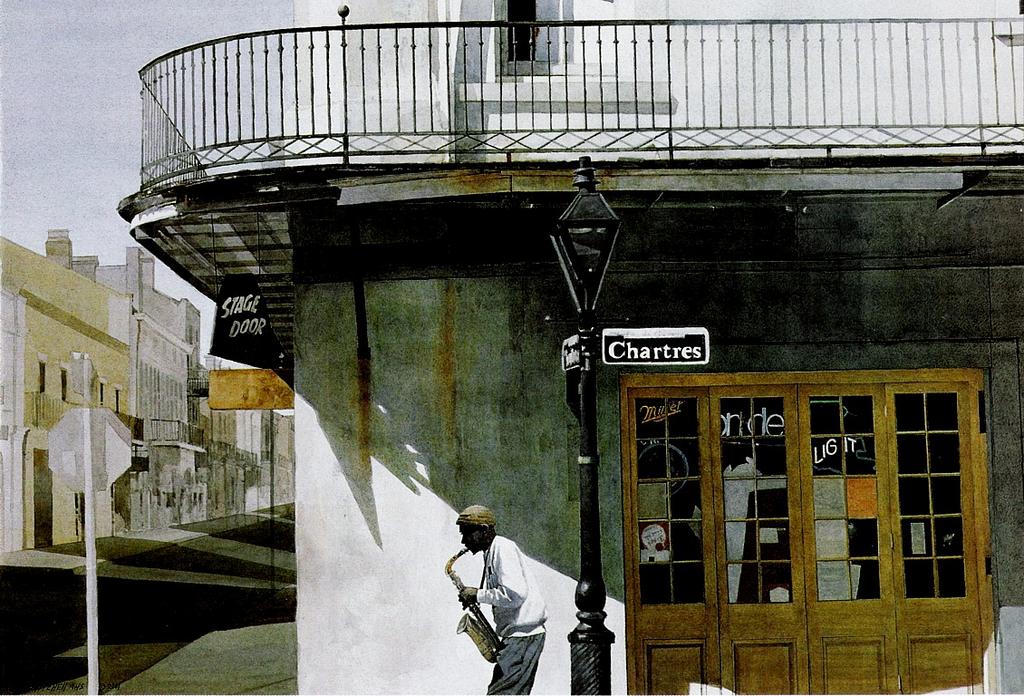
Friday, September 30, 2005

No One Aboard

Back last July 6, I spent eight hours under oath testifying about a Superfund case. I spent another four or five hours being deposed the next day as well.

Today, I got to sit on the other side of the table. The plaintiffs developed rebuttal reports from various experts, and I got to sit in as the defendants' lawyers deposed the rebuttal experts.

The trick is to not take it all personally. My ego got pricked every time I heard the rebuttal expert mention my name or my report, and even though he disagreed with the findings of my report, it was not a personal assault. But it's very easy to fall into the duality of "us" and "them," our side versus their side, and plaintiffs and defendants.

Of course, philosophically, there wouldn't be an "us" if there weren't a "them" to distinguish us from. Legally, there wouldn't be defendants if there weren't plaintiffs. It's all just two sides of the same coin. But when the rebuttal expert says he he finds fault with my report's conclusions, egotistical pride kicks in, heaven and hell are infinitely far apart, and I suffer and want the other side of the table to suffer, too.

However, Zen practice lets me recognize that all of this is nothing more than the mechanics of the mind, and I can let go of the anger while still doing my best to help the attorneys defend our client. In the end, if everything is done professionally, the truth will prevail.

The weather was beautiful the whole time I was in Washington - cool and dry and clear. I didn't get around town too much as I was pretty busy, but I did get to eat dinner at the Capitol City Brew Pub next to Union Station and at a neighborhood Mexican restaurant on Massachusetts Avenue. The George Hotel was great and crawling with politicos.

While I was in DC, John Roberts got sworn in as the new Chief Justice of SCOTUS, a job he will probably hold for the rest of my life, and Tom DeLay got indicted. The local news talked about some sort of stench that was reportedly coming from the sewers in the northeast part of town, and the FAA and the air traffic controllers were arguing over whether planes were disappearing from the radar screen for 30 seconds at a time or for "merely" 14 or 15 seconds.

Delta put me in the middle seat on the flight back, but I accepted my assignment - after all, I was heading home.


Thursday, September 29, 2005

More Karma

The "Acknowledgement of Karma" is from the initiation ceremony, or jukai, performed in the Soto Zen tradition. Here in Atlanta, we perform it twice a year (assuming new initiates have stepped forward).

For those interested in such things, an outline of the entire jukai ceremony can be found here.

The chant is also recited during other ceremonies, such as the renewal of precepts, known as fusatsu. During fusatsu, the "Acknowledgement of Karma" is chanted by those initiates who have already taken the precepts as a reminder.

Another version of the "Acknowledgement of Karma" goes:

All my ancient twisted karma,
From beginningless greed, hatred and delusion,
Born of body, speech and mind,
I now fully atone.

Yom Kippur, the Day of Atonement, begins at sundown on October 12. I hadn't considered that the holiday was coming up when I posted the chant yesterday. Actually, it was part of an email I had sent to my teacher, in which I had acknowledged that some of my egocentric, one-sided views had recently gotten in the way of my own practice. Long story.

I'm still in Washington, and the weather's been lovely. I had an opportunity to walk around the Capitol earlier this evening, and ate breakfast here at the hotel in the booth next to Sen. Hastert for the quintessential D.C. experience.

Wednesday, September 28, 2005

Acknowlegement of Karma

All the karmic action ever committed by me since of old
Arising from beginningless greed anger and delusion
Born of this body mouth and mind
I now acknowledge
and accept all consequence with equanimity

Oh, by the way, I'm in D.C. today. I flew up this morning, met with our Arlington office this afternoon, and am now staying in an E Street hotel in anticipation of two full days of meetings. Much of the hard work the last several days has been in preparation for these meetings. The die is cast; it now just remains to be seen how all that preparation plays out.

On Friday night, I get to be the one who goes back home.

Tuesday, September 27, 2005

Appreciation

Two days this week of long hours spent in the office. Very late lunches (2:30 or even 3:45 p.m.). Much stress. Hard work.

Of course, when I say "hard work," you must understand that I'm sitting on a comfortable chair in a private, air-conditioned office. The physical aspect is no harder than typing at a keyboard, which I'm doing now for leisure (note to file: why am I doing this again?).

Bob Marley once noted, "Every man thinks that his burden is the heaviest."

The truth is I live a charmed life. I get paid, and paid well, to use my mind instead of my muscles. I'm free and physically fit enough to hike in the mountains, scuba dive and jog. I'm healthy. My house rocks. I get to practice zazen.

These are not boasts. I'm just appreciating what is.

On a recent trip up to the mountains, I was accompanied by a young Bangladeshi. He told the story of a time when he visited a family in one of the wealthier suburbs. Upon arriving, he could not help but exclaim, "What a large house!"

"Why, thank you," the woman who owned it said.

This confused my friend. "I was just noting that the house was very large. Why would she take that as a personal compliment?"

When we cling to nothing, we have everything.

Monday, September 26, 2005

Sunday, September 25, 2005

Music Review: Muslimgauze

Bryn Jones was an extremely prolific electronic musician, strongly influenced by Middle Eastern music and politics. Although he was neither Arabic nor Muslim, he was a staunch supporter of Hamas and the PLO. Born in Manchester, England, he never visited the Middle East because he believed it was wrong to visit an occupied land.

He first began making music in 1982 under the alias E.g Oblique Graph. In 1983, he changed his name to Muslimgauze. The name was a play on the word "muslin," a type of gauze, and his own intense interest in the Middle East.

Strongly against the use of computers and samplers in music, Jones always recorded his music with old analog equipment. He would record himself playing various Middle Eastern instruments and record voices of Middle Eastern people from old tapes. Jones's music was heavily percussive; a review of a rare live performance notes that Jones used a "backing DAT tape with pretty harsh, rhythmic textures, his sort of patented spiraling hypnotic beat, to which he played on two or three different drums with great skill." He actually never looped his music; it was all recorded live, and edited/mixed afterwards. The end result was often fuzz-toned and loud, with sudden changes in volume.

Every Muslimgauze piece of music was inspired by a political fact or event. "The political facts of Palestine, Afghanistan and Iran influence the music of Muslimgauze" declares the back cover of one album. Album and song titles (e.g., "Hebron Massacre," "The Rape of Palestine" and "Vote Hezbollah") were intentionally provocative and confrontational.

Jones was never concerned with how many copies of his records were sold, or even how much listeners enjoyed his music, but rather how original his music was. Jones disliked live shows but was rarely asked to do them anyway, which is why Muslimgauze performances were so rare.

He always stated that he never had time to listen to other people's music, although in a 1992 interview with Impulse Magazine, he mentioned that he enjoys traditional music of Japan, the Middle East and India, as well as the works of artists such as Can, Throbbing Gristle, Wire and Faust. However, despite a few collaborations, Jones didn't trust anyone when it came to remixing his music. Instead, he would usually take pieces of music that were sent to him and remix them to his own liking.

The Muslimgauze discography is extremely vast. In 1995, he had six releases; in 1996, fifteen; in 1997, nine; in 1998, sixteen. Altogether, he released over 90 original albums on 32 different record labels, creating nearly 2,000 original songs. Most of his albums were released in limited editions of only 200-1,000 copies.

I spent much of today listening to his 9-CD release "Box of Silk and Dogs." William S. Burroughs once wrote that Arabic music seemed to work on what he called "hashish time," evolving without discernable beginnings and weaving and drifting endlessly through the air. My first reaction to hearing this music was wanting to check that the CD wasn't damaged - was it really supposed to sound like that? Perhaps a speaker wire is loose? The sound is fuzzy and static-laden, a lo-fi soundscape with sudden drops and rebounds in volume.

On December 30, 1998, Bryn was rushed to a hospital in Manchester. He had a rare fungal infection in his bloodstream, and had to be heavily sedated. His body eventually shut down, and he passed away on January 14, 1999.

I wonder how his music, with its provocative and confrontational song titles, would be received if he had lived to see the post-911 world, or his own England after the London bombings. If he weren't outright censored, his militantly noncommercial music would likely never find an outlet nor be heard in today's corporate climate.

Saturday, September 24, 2005

Shokai the Nerd

Alright, enough of the flood talk already. Miraculously, although Rita was the strongest hurricane ever recorded in the Gulf of Mexico, and the third strongest hurricane observed in the Atlantic, no one seems to have died from its landfall. The storm is now stalling over the lower Mississippi Valley, so it's likely to bring more flooding downriver to New Orleans, but while I sympathize, and am outraged by the government's prior inaction, it's time to move on and blog about other things.

I played the nerd today. I bought this new computer late last Sunday afternoon, and while I had time to set it up and get on line, I really didn't have time to do too much else with it all week. So this morning, I came into the office with a big cup of Joe, sat down, and was the computer geek all day.

My first challenge was setting up Outlook, so I wouldn't have to get all of my email on the Web. I entered the 25-digit Windows product-validation code when prompted, but the computer kept telling me that it wasn't a valid number. I kept trying and re-checking (was that a capital one, or the letter "i?") until it finally dawned on me that I was entering the Windows operating system code, not the Microsoft Works code (wrong CD).

That seemed to be the breakthrough, and soon I had my email client up and running, the Windows office package, and all the various virus protectors, spyware sentinels and other cyber prophylactics required these days.
Then I rolled up my sleeves for the real challenge - the old broke-down dinosaur in the other room. My old computer still had all my old digital photographs, including pictures of my trips to Bahamas, Corsica, Florence and Budapest, plus sundry holidays, hikes, and other highlights of the last few years. And a boatload of music files, downloaded programs and all of my email and contacts since June 2001.

Well, I fixed it! I put the system recovery disk in the CD drive and started it up, and instead of slipping back into Safe Mode, it started right up - it even seemed to be operating better than it had been for a while; the convalescence seems to have done it well. I didn't waste any time retrieving the most important items, and I immediately started burning the digital photos to disk. I gained confidence as the afternoon passed, and I was eventually able to harvest about everything I needed.

So now I have two computers - one in the office and one in the meditation room. That's sort of like me - a little extravagant, definitely impractical, and very idiosyncratic. One could argue that I didn't need to have bought this new computer, but instead should have put more effort into fixing the old one - like I did today - but I have no regrets. The old dinosaur was barely limping along on Windows ME and as much time as I spend at my computer, I didn't need the aggravation. Maybe I'll network the two, and let them talk among themselves and keep each other company while I'm at work.

Friday, September 23, 2005

Rita

Rita has started her destruction even before she made landfall - heavy rains have overtopped the levees in New Orleans and re-flooded the Lower Ninth Ward. A storm surge of seven feet pushed water from Lake Pontchartrain through the Industrial Canal and cascading over a repaired levee.

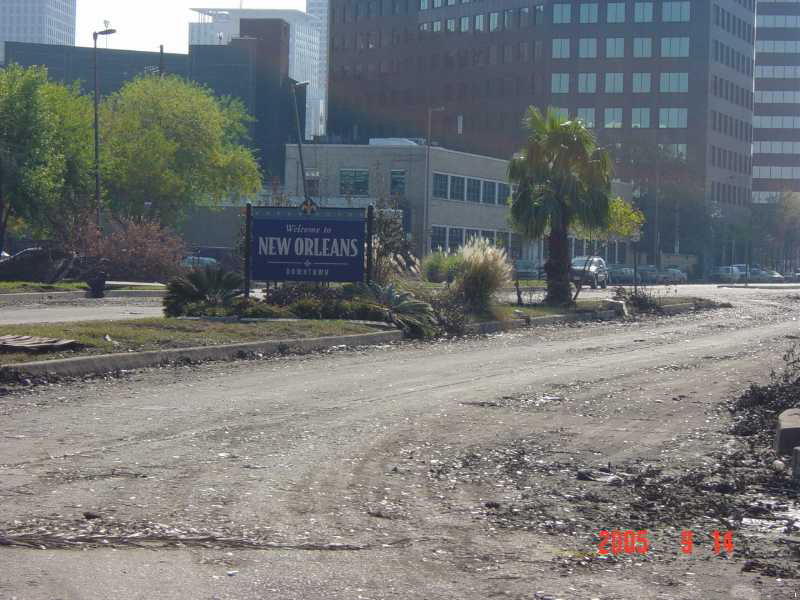
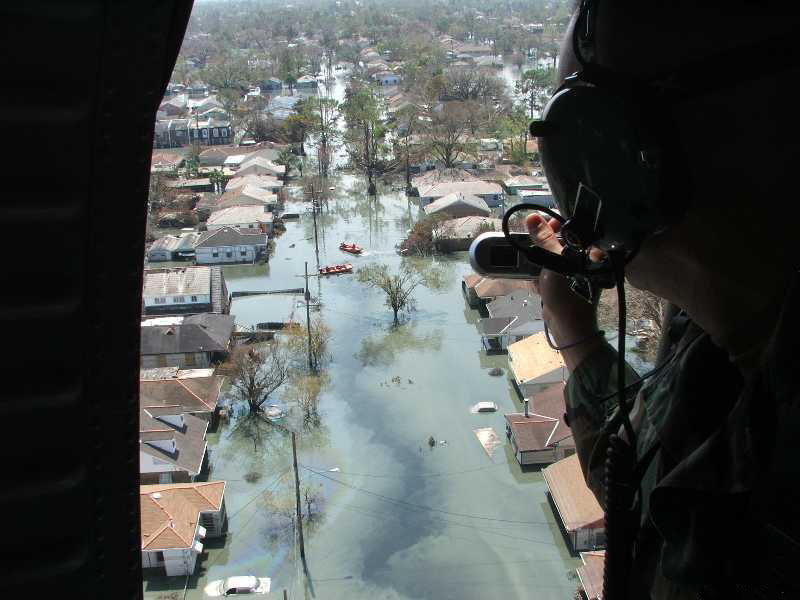
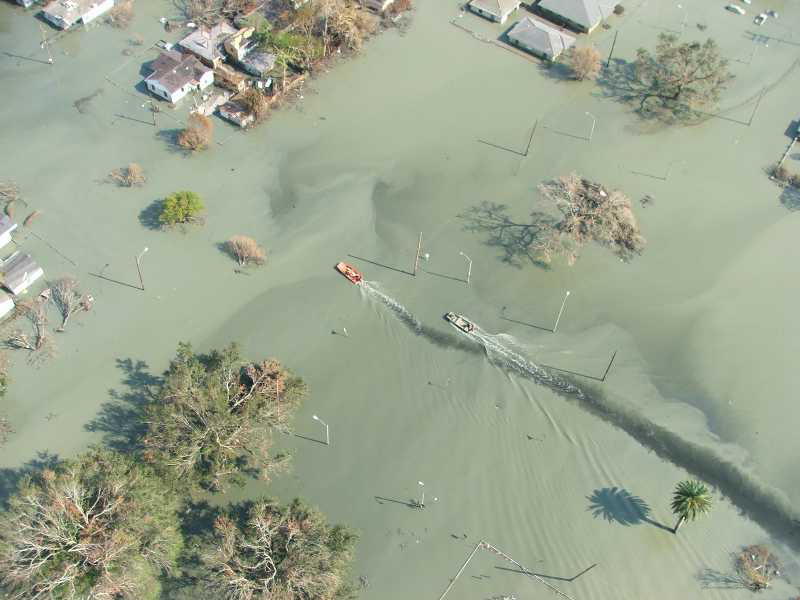
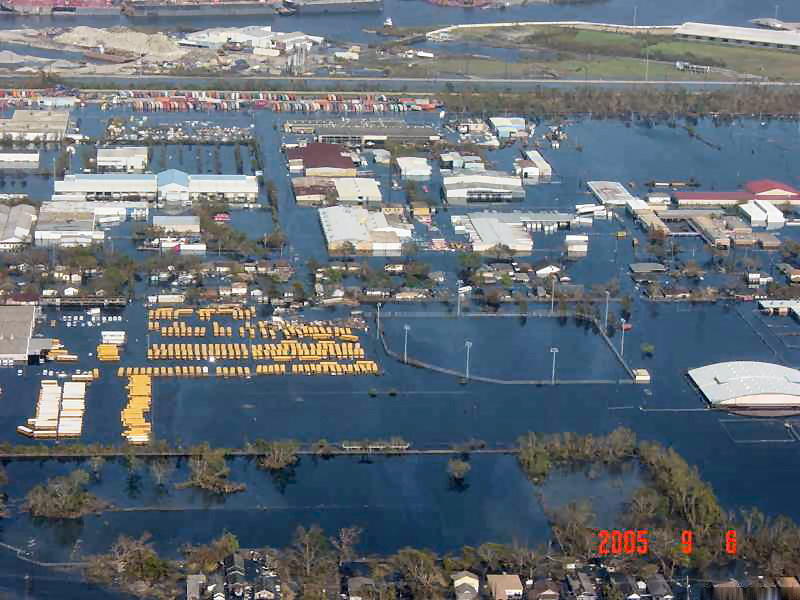
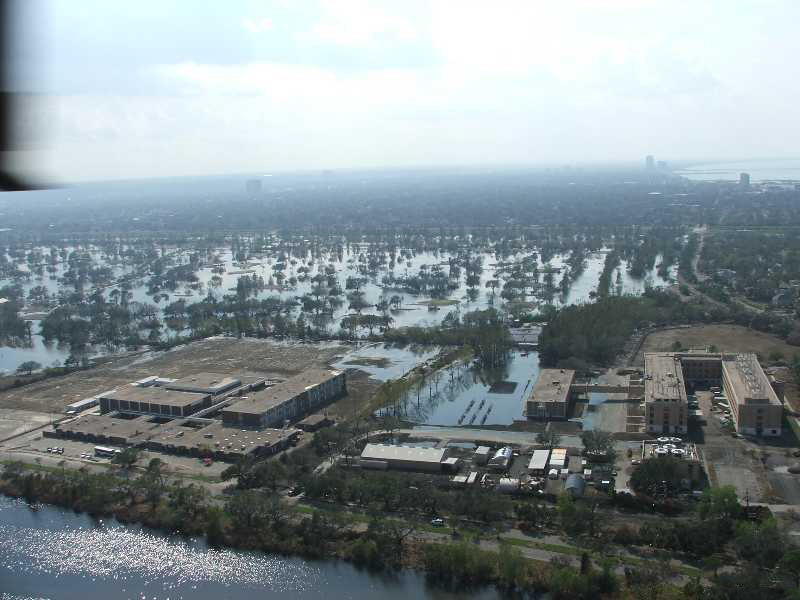
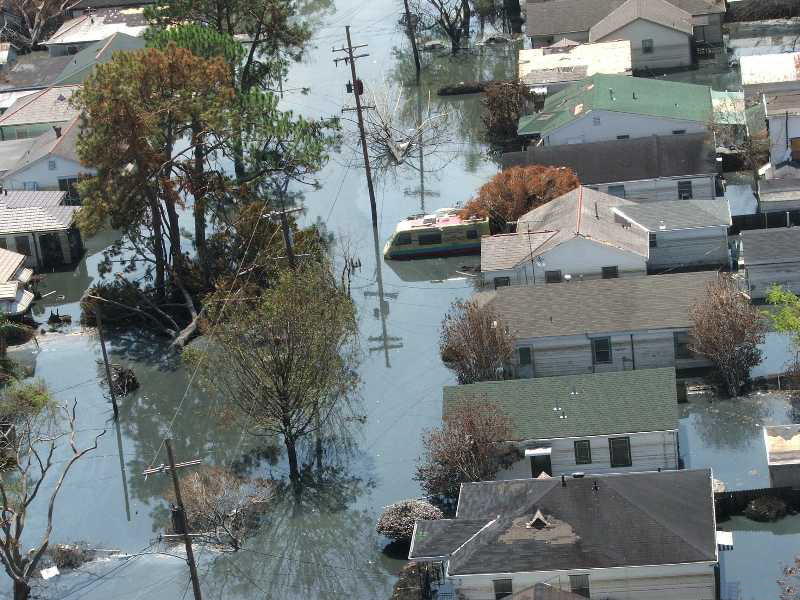
This blog, like its author, has always been graphically oriented, and even as Rita nears the shore, I came across these pictures of New Orleans in the wake of Katrina. These pictures are a sobering reminder of what East Texas and Western Louisiana might be in for, or what New Orleans might experience yet again.

I pray for the safety and well-being of everyone in the storm's path.

Thursday, September 22, 2005

Two Haiku

The Earth arrived at the autumnal equinox at 6:23 pm today. Since the very first day of June, the mornings have been noticably cooler. Also, the tree droppings on my patio have taken on a different form - instead of the magnolia leaves of May and June or the storm-tossed branches of July and August, I am already getting brown, dry leaves - the first harbingers of The Fall?

First leaves of autumn
Drop down from branches and watch
My beard growing back.

I've been working long hours the past few weeks. Even though the Pascagoula Project has been shut down apres Katrina, I've still been working on the case that I was deposed for last July as well as other projects, plus some pro bono work related to the proposed Atlanta BeltLine. Too busy to even notice that it's now been three weeks since the repairman took my television to the shop with him and still hasn't told me when he's going to give it back.

The Unsellable
Condo in Vinings is still
Out on the market.

At least some things never change.

Wednesday, September 21, 2005

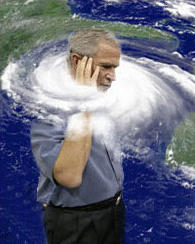
God is unhappy with George Bush

In Chinese lore, it is said that when the levees break and the rivers flood, that the emperor has lost the "Mandate of Heaven." After all, when an emperor foolishly pursues war at the expense of his people's well-being, then the gods will be unhappy. The levees break, the people rebel, and the government falls. As UC Berkeley professor emeritus Franz Schurmann wrote earlier this year (pre-Katrina):

The disasters occurred especially in the Yellow River region, ancient China's homeland. Confucius put the blame on the power-driven warlords, each of whom insisted they alone had the "Mandate of Heaven," or more correctly, "God Commands" (tianming). Instead of making sure the levees vital for an overwhelming peasant society were secure, for example, the warlords first selfishly pursued their own aggrandizement.

In a more colloquial fashion, a good pal of mine (who shall remain nameless), just wrote me this thought:

Y'all might be amused to note that in Hurricane Katrina Trent Lott lost his home, while Hurricane Rita (which as of today was upgraded to Category 5) is currently on track to wreck straight through Crawford, Texas. Who's got God on their side, now, be-yatch?

Now that's the wisdom of the ages.

Tuesday, September 20, 2005

Katrina Revisited and Predicted

"It was a broiling August afternoon in New Orleans, Louisiana, the Big Easy, the City That Care Forgot. Those who ventured outside moved as if they were swimming in tupelo honey. Those inside paid silent homage to the man who invented air-conditioning as they watched TV "storm teams" warn of a hurricane in the Gulf of Mexico. Nothing surprising there: Hurricanes in August are as much a part of life in this town as hangovers on Ash Wednesday.

"But the next day the storm gathered steam and drew a bead on the city. As the whirling maelstrom approached the coast, more than a million people evacuated to higher ground. Some 200,000 remained, however — the car-less, the homeless, the aged and infirm, and those die-hard New Orleanians who look for any excuse to throw a party.

"The storm hit Breton Sound with the fury of a nuclear warhead, pushing a deadly storm surge into Lake Pontchartrain. The water crept to the top of the massive berm that holds back the lake and then spilled over. Nearly 80 percent of New Orleans lies below sea level — more than eight feet below in places — so the water poured in. A liquid brown wall washed over the brick ranch homes of Gentilly, over the clapboard houses of the Ninth Ward, over the white-columned porches of the Garden District, until it raced through the bars and strip joints on Bourbon Street like the pale rider of the Apocalypse. As it reached 25 feet (eight meters) over parts of the city, people climbed onto roofs to escape it.

"Thousands drowned in the murky brew that was soon contaminated by sewage and industrial waste. Thousands more who survived the flood later perished from dehydration and disease as they waited to be rescued. It took two months to pump the city dry, and by then the Big Easy was buried under a blanket of putrid sediment, a million people were homeless, and 50,000 were dead. It was the worst natural disaster in the history of the United States.

"When did this calamity happen? It hasn't — yet. But the doomsday scenario is not far-fetched. The Federal Emergency Management Agency lists a hurricane strike on New Orleans as one of the most dire threats to the nation, up there with a large earthquake in California or a terrorist attack on New York City. Even the Red Cross no longer opens hurricane shelters in the city, claiming the risk to its workers is too great."

- Joel K. Bourne, Jr., Gone With the Water, National Geographic Magazine, October 2004 (that's right, almost a year before everything predicted above actually came true)

Monday, September 19, 2005

New Computer

As anticipated, I wound up going to Comp U.S.A. and bought myself a new computer yesterday. Quite an improvement over the old failing computer that I bought way back in 2001. Now, I've got a 3-gig processor, 1-gig of RAM and a 250-gig hard drive. I should be able to get that Frogger across the street now . . .

For what it's worth, this is my first post with the new computer. Last weekend's entries were posted using my office laptop.

The old H.P. is now sitting on a desk in the meditation room as I try to figure how to retrieve over two years' of digital photographs, sundry downloaded programs, gigs and gigs of MP3s and over four years of email (not that I need everything - no attachments and all that - but it would be nice to get some of it back).

If anyone has an idea of how to get a memory-challenged computer out of Safe Mode, please advise.

Anyway, this new computer's way fun, at least now in our honeymoon phase. But it's a long road ahead.

Sunday, September 18, 2005

Happy 50,000th!

(Sometimes these blog entries just seem to write themselves. If you're a frequent visitor here, you may want to skip this entry and come back tomorrow.)

Yesterday was a fair day in Boulder, Colorado, mostly sunny with a high around 80. _____ wondered how the rest of the afternoon was going to go. ______ was working at the Broadway Suites, downtown Boulder's premier executive offices, located at 1942 Broadway on the Pearl Street Mall. Anyway, _______ was wondering what to do with the rest of the day. Perhaps there was still some time to go mountain biking. Maybe go to a movie. Or maybe just a little shopping, followed by a quiet night at home.

_____ decided to check the Internet. _____ has a Macintosh computer, and uses a Safari 1.3 browser. For those who care about such details, the monitor was set at a 1280 x 960 resolution. Web surfing, being what it is, led one thing to another, and before too long, _____ saw the craziest picture on Google Image Search of the blessed Virgin Mary holding a small t. rex. _____ just had to follow the link to this crazy picture, and at 3:17:41 p.m. yesterday afternoon, _____ became the 50,000th visitor to Water Dissolves Water.

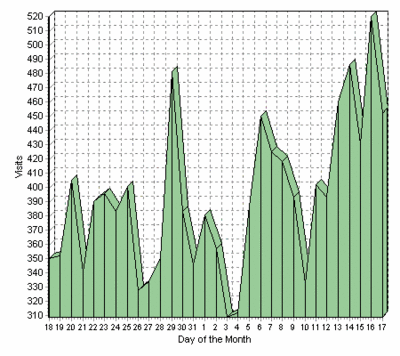
Saturday was auspicious for several reasons. Not only did it mark the 50,000th visit, but it also was the first day this site got 500 hits. And it marked the day my computer died, although I do not think it was the traffic that finally crashed that wretched beast.

Traffic to this site is normally down on weekends, so it's all the more amazing that both records, 500 hits and 50,000th visit, occurred on a Saturday. The vast majority of the visits still seem to be Googling Monkeys looking for Jimi Hendrix pictures, whom I'm happy to oblige. A rather improbable and slightly psychedelic picture of a rug barn is inexplicably the second biggest attraction. Next comes a picture of Courtney Love, the creation of Adam, and Jack Vettriano's Private Dancer, the latter coming mostly from the U.K. Rounding out the Top 10 are Amanda Keeys' I Love You to Death and Edith Vonnegut's Goddess In the Freezer, the requests for that latter one coming mostly from France. The list goes on with mostly the same images, but as requested in Germany, France, the U.K. and Canada. My international profile looks like this: Of course, those of you who check out my Site Meter already know all of this.



The top search words that bring visitors this site are jimi hendrix, sexblog, "water dissolves water", aj mclean stepsister, armin meiwes, art rene, bodhidharma way come to china koan, bootleg drew womack , fresh water mold in new orleans from katrina, homosexual actors, http://shokai.blogspot.com, jimi, mount everest, radio television, ray charles, shokai, t-rex, water dissolves, and, finally, what dissolves in water.

But what does all of this have to do with our friend _____ in Boulder? Damn if I know. ______, if you're reading this, if you saw something here that compelled you to come come, please email me. I want to know more, more about you, how you came across the V.M. and t-rex picture to start with, and what you thought of this site.

You are, after all, something of a celebrity around here.

Saturday, September 17, 2005

Death of a Hewlett Packard

Well, my television set is now in the repair shop for the third week. I don't think it's that badly damaged, I think the repair shop is that incompetent. Calling them (they never call me, despite their promises), they have one excuse after the other, from "the part was delivered too early for us to get it" (in other words, "we slept too late to meet UPS") to "the technician is out all this week" (in other words, "we can't fix it ourselves, and have to call in for help").

But worse things can happen than I go without t.v. for three weeks. At least I have the internet.

Or so I thought. As I have been predicting for some time now, my computer's been slowly dying and this afternoon it finally gave up the ghost altogether. Dead. A useless pile of electronic components.

For some reason (premonition?), I brought my office laptop home with me this weekend, which is why I'm able to post this.

So I'm off to Comp U.S.A., I guess, to buy a new computer.

My old H.P., for those wondering, was purchased in May 2001, so I got 4 years out of it.

I suppose the stereo's due to go out next here at Shokai's House of Dysfunctional Electronics.

Friday, September 16, 2005

The Blame Game


"Katrina exposed serious problems in our response capability at all levels of government, and to the extent that the federal government didn't fully do it's job right, I take responsibility," Bush said. "I want to know what went right and what went wrong."

When I first heard this, I thought that this was the first time ever in Dubya's entire presidency that he ever took the blame for adminstration failures. I was hoping that he had sobered up and finally realized that he's actually in a position of responsibility and not at some frat house party. That alone was a pretty sobering thought.

But then I realized that the phrase "to the extent that the federal government didn't fully do it's job right" was custom made to re-surface later as his way to weasel out.

It's all a P.R. gambit. Act humble and take responsibility while your ratings are low, but leave yourself a loophole for when they want to love you again. If you recall, for a while there, Rumsfeld was in the habit for taking responsibility, too. There are no real negative consequences, and if people respect the responsibility-taker for takin' the blame, the only consequences are positive.

If Bush's ratings drop any lower, look for him to take responsibility for the Holocaust, the Whitewater scandal, and for shooting J. R.

Thursday, September 15, 2005

Nantahala National Forest

I know I've been falling behind in my blogging but, even though I haven't been in Pascagoula for a while, I have been quite busy. Too busy to post at least.

And tonight is no exception. But to keep the ball rolling as it were, here are some pictures from last Saturday's zen hike up to the Slickrock Creek Trail in North Carolina:

Wednesday, September 14, 2005

Tuesday, September 13, 2005

Monday, September 12, 2005

Biloxi

A friend/dive buddy of mine decided to load up his truck with camping equipment, scuba gear for salvage work, and tools and chainsaws and head to Mississippi to help in the Katrina relief effort. Below is his narrative from Gulfport for those interested in a first-hand account of conditions down there, not filtered by the news or the administration.

Sent: Friday, September 09, 2005 6:39 PM
Subject: Hurricane Katrina news from Gulfport, MS

Greetings from Gulfport Mississippi, specifically one mile north of highway 10 on state route 49.

My first day here has been a real experience. It's hard to tell where to start, my day started at sunrise after spending the night in my truck in a church parking lot. Jumping ahead my accommodations now are much better, we are in an impromptu distribution center in a empty
supermarket. Semis bring in donations all day which are sorted then reloaded and distributed to sites around Gulfport and Biloxi.

Early this morning as I was finding my way around I ended up in a devastated neighborhood, nothing but foundations left. I came across a church group, seven guys from Michigan, unloading supplies from a bus. I pitched in and ended up loading and unloading the bus three more times today.

It is hard, hot work but very rewarding, the people we are delivering supplies to are in dire need and very appreciative. I have dealt with crying grandmothers and laughing babies. We just finished loading the bus and will make a run first thing tomorrow morning to the projects in Biloxi.

That is the positive side, on the negative things are very disorganized and I have collected some real horror stories about the FEMA bureaucracy. That and there are so many military and police officers from surrounding states that everyone is lost and no one knows what is happening. In spite of that almost everyone just pitches in an does what needs to be done. We talk to each other and help each other out. The Army filled our bus with diesel today, we finally found the right officer!

The church group has made me family and we are camped out under a store awning here at the distribution center, other than the trucks and police cars parading through it is great. Lots of company, food and water, we even appropriated donated foam pads and sleeping bags, we have coolers, generators, a grill and occasional Internet access when Sprint is not over loaded. The one thing we really need is hot showers, our hygiene is not the best right now.

Some random thoughts, I may never drink bottled water again, it is everywhere and heavy to load! Your donations are getting through, we see it all; MRE's, tons of diapers and baby food and bags of donated mixed can goods, lots of bulk stuff, most seems to be from private organizations. The distribution is not efficient, trucks misdirected, too much time spent waiting for decisions, etc. But after just a day here we are becoming the experts and learning our way around. That will change, there is talk of us moving to a distribution center in Downtown Biloxi tomorrow.

I still think there is some diving work that I can do to help out, I have been passing fliers out to police and rescue workers I have met and they all assure me they will call if they find the need.

Well I will close for now. I tried to send pictures but Sprint can't deal with it tonight, service is really strained down here.

Sunday, September 11, 2005

The French Quarter

Saturday, September 10, 2005

New Orleans


Friday, September 09, 2005

Alfred Remembered


Thursday, September 08, 2005

John Barth on Charles P. Mason

“If questioned on the matter he would most likely assent to the proposition that telling stories is as characteristically human a thing as we humans do, and is thus itself at least as fit a story-subject as another. How goes it friend? How was your weekend, your childhood, your parents’ divorce, your first life-changing love affair, most painful disenchantment, biggest mistake, dying day? And what does it tell us about you that you tell us those particular stories about yourself and not others – that, moreover, you tell them the way you tell them – rather than telling some other stories some other way? Nay, more: Though neither philosopher nor cognitive scientist himself, Charles P. Mason would, if asked, almost certainly agree with those “neurophilosophers” who hold that consciousness itself has evolved to be essentially a scenario machine; that in order to make sense of and to navigate through the onstreaming flood of signals deluging our senses, our brains posit the useful fiction of a Self that attends, selects from, organizes, considers, speculates, and acts upon that data – an “I” who invents and edits itself as it goes along, in effect telling stories to itself and to others about who it is. Indeed, an I whose antecedent is, finally, nothing other than those ongoing, ever-evolving stories, their center of narrative gravity.”

- John Barth, from The Book of Ten Nights and a Night, 2004, Houghton Mifflin

Wednesday, September 07, 2005

House of Dysfunctional Electronics

Although this is Wednesday's post, I did not post this post on Wednesday, despite what the timestamp says - I had to post this, Wednesday's post, on Thursday, and back-date it to Wednesday.

I was not able to post Wednesday's post on Wednesday because my computer would not let me on line yesterday. Although it worked briefly in the early evening, it required a rebooting - something it now seems to need a couple of times a day - and after shutting down, would not start back up. Annoyingly, it lapsed into "scan disk" mode, and kept teasing me by allowing the blue "percent complete" bar to get tantalizingly close to the far right, only to start over again, again and again and again. Then, when I finally had it with that game and clicked the "Stop" button, it began the slowest startup in the history of computing, and I'm going all the way back to the time it took Confucius to string the beads on his first abacus!

Anyway, I eventually got this aging 'puter to start, but once operating, it couldn't find whatever it is it had to find to let MS Explorer take me on line. The modem lights all looked like the connection was all right, but no access.

I finally gave up and went and read for a while - probably a better use of my time, anyway. But in any event, the computer started up fine today (Thursday), allowing me to post this and "tomorrow's" blog entries.

Anyhow, the computer isn't the only electronic appliance not working around here. Come, tour my home with me, and let me point out all of the dysfunctional electronics around here.

See that stereo system over in the corner of the living room? Hear those fine, high-fidelity sounds? Well, you're only hearing one channel, played in mono, because the left channel burned out. Four speakers - only one of them playing.

(It is interesting to note, though, that it sounds better to me now that I've moved it to that corner. Nothing to do with acoustics or performance, but the system looks better over there, and the room looks better re-arranged with the stereo in the corner and the desk formerly in the corner now in the den, and for some reason this improvement in appearance actually makes the stereo sound better to me. Go figure.)

Anyway, let's continue the tour into the den, shall we? Yes, the desk does look nice in that corner, but see over there? That pile of cables, DVD player, cable and converter box lying on the floor? There used to be a television under it, but it went on the blink two weekends ago and has been in the shop since last Wednesday. Yes, my friends, I went the whole Labor Day weekend - including the first Saturday of the college football season - without t.v. And the shop has been incommunicado; no prediction on when they'll get around to fixing it.

So, then, we have a computer that's on its last dying breath, a stereo that's deaf in one ear, and a television in the shop. I haven't had a run this bad since the last week in December 1999, when my monitor, my microwave and my cell phone all went out within a few days of each other, leaving me wondering if all the anxiety about the Y2K bug wasn't coming true after all.

So, thanks for taking the tour of Shokai's House of Dysfunctional Electronics. Please be sure to pick up your souvenir calculator/alarm clock on the way out - guaranteed not to do basic math or tell time or your tour fee will be gladly refunded.

Buh-bye!

Tuesday, September 06, 2005


Monday, September 05, 2005

Happy Labor Day!


Update - I was just going to leave the pictures above as one of my "picture" posts, as opposed to, say, one of my "dharma" posts or one of my "political" posts or one of my "humor" posts (when will I ever get to the point where I can do all at once?), but I just wanted to add that even though September has only been here for a few days now, the evenings are already noticeably cooler. Not even close to chilly yet, not by a long shot, but pleasant and dry and cooler than the day, as opposed to the warm, humid embrace of a mid-summer's Georgia evening.

At the Zen Center, we sat for three consecutive periods rather than the usual Monday-night routine of two periods and a talk. The silence and the sitting were profound.

Sunday, September 04, 2005

Dental Hygiene - A Short Story

Last night, I wrote a short story that was so dark, I'm hesitant about posting it. It's based on (and incorporates parts of) a couple of non-fiction pieces by Malcolm Gladwell and Tad Friend that appeared recently in The New Yorker, and was inspired in part by the writings of Franz Kafka and J.D. Sallinger, plus the recent events in New Orleans. For what it's worth, here it is:

One morning, as Gregor S. was flossing his teeth, he missed an area between his lower left molars. Being left handed, he often had difficulty reaching this area, when he bothered flossing at all. He would turn his right hand one way and then the other, but still not get a good grip on the floss. Plus, if he continue to try long enough, his fingers reaching into his mouth would eventually wind up gagging him.

In the area that he missed, a bit of food from the night before remained lodged between the molars and began to rot. That bit of food became colonized with bacteria, which fed off the sugars in his mouth and formed an acid that began to eat away at the enamel of the adjacent tooth. Slowly, the bacteria worked its way through to the dentin, the inner structure, of the tooth, and from there a cavity began to blossom three dimensionally, spreading inward and sideways. When the decay reached the pulp tissue, blood vessels and nerves serving the tooth, an insistent throbbing began. At the base of the tooth, the bacteria mineralized into tartar, which began to irritate his gums. They became puffy and bright red and started to recede, leaving more and more of the tooth's root exposed. When the infection worked its way down to the bone, the structure holding the tooth in began to collapse altogether.

This was not the first time that this had happened to Gregor S. The gum line across his entire mouth was highly irregular, giving the appearance that his teeth were all of different sizes, and many of his teeth were discolored and crooked.

The pain from his frequent toothaches caused him to drink heavily, and he was, by the time of that morning, a mild alcoholic. He had never excelled professionally, because his employers, finding his appearance unacceptable, shielded clients from him. He also noted that his opinions were not taken seriously by his employers, coming as they did from his unsightly mouth. His bad teeth were seen as a marker of poor parenting, low educational achievement and slow or faulty intellectual development, when none of these were actually true.

He had never married, as women generally found his smile unappealing. "If he can't even take care of himself," they thought subconsciously, "How will he ever take care of me?" The few that were able to overcome this handicap were eventually turned off by the lack of self-confidence and self-esteem that resulted from his crooked teeth. "There's three ways human beings express affection," a lover once told him as they were breaking up, "by smiling, by kissing, and by making love. Women are not attracted to your smile, so that option is not open to you. Your breath is bad," another side effect of the dental diseases, "so kissing is generally out of the question. And with those two ways of expressing affection gone, no one gets to the third option."

In truth, Gregor S. was a generally adequate lover, but he was handicapped by an anxiety of showing his teeth during sex. He always feared that if he smiled out of pleasure, or even opened his mouth, his partner would be repulsed, the moment shattered and the coitus interrupted. So he generally made love with his lips pursed together, breathing through his nose, which limited his oxygen intake and prevented him from especially vigorous intercourse. So he was generally thought of as an adequate but unexciting lover, when, in fact, he actually had a woman.

One evening, about a year after he missed the bit of food during his morning flossing, he had to drink several shots of whiskey and take ibuprofen for the pain in his infected molar before he went to bed. He undressed, and closed his bedroom door to cut down on any noise that might further hinder his attempt to get to sleep.

While he was sleeping, a tiny bit of pulp, a clot really, fell away from the rest of the tooth and found its way into an exposed, nearby artery and into his bloodstream. When it reached his heart, he suffered a cardiac arrest and died in his sleep.

Since he lived alone, no one discovered his body that next morning. His co-workers wondered why he hadn't come to the office, but his position was not important enough for them to worry themselves over him, so no one called on him to see if he was all right. He was not close with his neighbors, and had no lover who might come by to visit. So alone in his bedroom, his body began to decompose.

Rigor mortis had set in almost immediately, but soon his skin began to slough off in sheets, and then his body cavity began to swell from gas generated by bacteria. This swelling increased the sloughing off of flesh as his stomach and abdomen rose. Finally, he began to putrefy and decay, his organs liquefied and his brain came bubbling out of his mouth and ears. A black mold began to grow over his corpse and then the bodily fluids that had leaked out all over his bed sheets. Due to the increased humidity in the bedroom resulting from his decomposition (the closed door prevented fresh air from circulating into the room), the black mold spread from the sheets and pillows up the headboard of his bed, and then onto the walls and eventually even the ceiling where the vapors had been rising from his corpse.

When the police finally arrived at his house, having been called by the mailman who noticed the bills and magazines accumulating in his mailbox for weeks, they were impressed by how the black mold on the ceiling mimicked the shape of the corpse. It almost looked like a reflection or a black velvet silhouette over the now unrecognizable mass of decay.

Saturday, September 03, 2005

Requiem for New Orleans


New Orleans will never be the same again, neither in reality nor in our imaginations (if one is able to distinguish between the two). The Big Easy, once the symbol of a sort of Francohedonistic culture right here in the U.S.A., will now forever be thought of in terms of tragedy, just like the World Trade Center or the federal building in Oklahoma City.

The home of Louis Armstrong is now gone, and I bid it a fond farewell. Flannery O'Connor once wrote that New Orleans is one place where the devil's existence is freely acknowledged, and it seems like old Belial has come and reclaimed the town for himself.

However the city is rebuilt, if the city is rebuilt, it will always be watched nervously as the next storm develops in the Gulf, the next time the Mississippi floods, and the next time earthquakes shake the Reelfoot fault zone.

Goodbye, New Orleans.

Friday, September 02, 2005

New Orleans Is Burning

The City of New Orleans is fast slipping past the point of redeemability and into total chaos. Thousands of people without food, water, shelter, medicine or hope. Dead bodies lying out in the streets, floating in the floodwater, and in the Superdome with the refugees. Gangs of armed looters are terrorizing the victims and shooting at rescue workers.

The looters are stealing televisions and shoes, yet they walk right past the bleach and coffee filters. One gallon of bleach will treat two thousand gallons of dirty water and the filters will take out most of the particulate matter. Four drops of bleach per quart of fouled water. But they sit, thirsty on their TVs with their new sneakers, and complain that no one is helping them.

The National Guard has finally arrived, but so much damage has already been done. So, if this administration can’t protect its own people and respond in a timely manner to a very predictable hurricane, why do people think the government can respond to the next terrorist attack? The Bush administration denies that global warming is occurring, sends most of our troops on a pointless adventure in Iraq, and has run up an astronomical budgetary deficit, having inherited a budget surplus. Bush has publicly admitted that the relief effort is "not acceptable," but he does not have to look past the mirror to find who’s responsible.

Bush can’t help you, and the government can’t help you. There’s only one thing you can do (two if you have bleach and coffee filters) – VOTE THE BASTARDS OUT OF OFFICE! This election, right now, make your dissatisfaction known. Support Cindy Sheehan. Get involved in grass-roots activism. Don’t make me run for president myself (I’ll do it!).

But while chemical plants are on fire, and a pervasive petroleum sheen is seen on the water from a mix that likely includes dry-cleaning solvents, household cleaners, and gasoline, experts have expressed some relief that chemical facilities and refineries near the city remained intact. While some plants were flooded once the levees broke, they were apparently spared the force of the storm surge, which might have cracked storage tanks and released tons of chemicals into the floodwaters. It's not the worst scenario that could have been envisioned. However, Federal officials have declared a public health emergency, fearing that viruses and bacteria from sewage in the floodwaters could cause a major outbreak of intestinal illnesses.

But far from being solely a "natural" disaster, Hurricane Katrina's impact was compounded by human alterations of the Gulf Coast ecology. The landscape of South Louisiana depends on floods: it is made of loose Mississippi River silt, and the ground subsides as this silt consolidates. Only regular floods of muddy water can replenish the sediment and keep the landscape above water. Complex levee and canal systems built to protect New Orleans from being flooded by the Mississippi River, and to improve the river as a shipping channel, channel the river's nourishing sediment to the end of the delta and out into the deep water of the Gulf of Mexico. Although early travelers realized the irrationality of building a port on shifting mud in an area regularly ravaged by storms and disease, the opportunities to make money overrode all objections.

The flood control projects have also prevented river silt from replenishing the region's marshlands and river delta for centuries. More than a million acres -- 1,900 square miles -- of Louisiana's coastal wetlands have been lost to development and flood controls since the 1930s, along with barrier islands and stands of coastal forest. Louisiana continues to lose about 25 square miles of coastal area each year. These natural barriers could have absorbed some energy and water from Katrina's storm surge and mitigated the hurricane's force; studies estimate that storm surges rise by about a foot for each square mile of wetlands lost.

So is it worthwhile to rebuild a city that’s likely to only flood again? At the cost of the wetlands and barrier islands that would otherwise protect the rest of the state? I don’t have the answer, but it’s an important question to ask. However, I fear we’re not going to hear any real debate on it.

Thursday, September 01, 2005

In Pascagoula, Katrina claims a neighborhood

BY TONY GNOFFO
Knight Ridder Newspapers

PASCAGOULA, Miss. - (KRT) - The homes on Beach Boulevard didn't have a chance.

All that stood between them and the surging Gulf of Mexico at the height of Hurricane Katrina on Monday was the boulevard and a low concrete seawall. Wednesday, the boulevard, the seawall - and the gulf - were still in place. Almost all the houses were gone.

People who lived on the boulevard, including Sen. Trent Lott, R-Miss., and their neighbors in the blocks behind them, said their community was a showplace in this city of about 25,000 people 110 miles east of New Orleans. Now its distinction is that it is probably the hardest hit neighborhood in the city, which was still without power and running water Wednesday, said the deputy police chief, Scott Ferguson.

Officials say they do not know if anyone perished in the community as the gulf tried to wash it away. Some folks in the Beach Boulevard community said they believed some neighbors were unaccounted for.

Many people stayed in their homes during the storm, including Nanette Clark, who lives several blocks behind the boulevard. She and her friend, Jayne Davis, spent the night and day of the storm moving furniture to a higher floor as water lapped, then pounded, at the front door. Some water did seep in, but the door held.

Davis was glad she stayed there; her own home was one of the St. Charles Condominiums in nearby Biloxi, where 30 people were killed by the storm surge on Monday.

On Tuesday night, Davis said, she and Clark shot at looters from the second-floor balcony of her pink house with gingerbread trim. Nobody was injured and the looters scattered, she said. Many hand-painted signs in that neighborhood warned looters that they were likely to be shot by armed homeowners.

Police said they had detained dozens of people for looting, but had to let many of them go because the city's jail, and others in surrounding communities, could not be occupied because they lacked power and plumbing. "We treat each one on a case-by-case basis," Ferguson said Wednesday. Most of the looters, he said, "are the unusual clientele we have even when there isn't a storm."

Stopping looters and restoring water and sewer service were high priorities for officials in Pascagoula on Wednesday. Just getting the sewers operable by restarting city pumping stations "would do much to improve morale," said the city attorney, Melvin Mitchell.

He said the pumping stations would be restarted as soon as generators arrive to power them. And just as he said that Wednesday afternoon, two trucks carrying generators rumbled by the police station. "God bless generators," he said.

Two of the region's economic engines are in Pascagoula, and both have been idled by the storm. Officials at the Northrop Grumman Ship Systems - the old Ingalls shipyard - and at the Chevron Oil Refinery were unavailable for comment Wednesday. But city officials said they expected that the plants would not return to full operation for weeks or even months. Northrop Grumman employs about 10,000 people, the refinery has about 1,200 employees.

On Beach Boulevard on Wednesday afternoon, Lott could be found doing the same thing as his neighbors: picking through the debris that used to be his home. On a sandy patch of ground, he had carefully arranged family mementoes - a framed photo, a china serving plate, small brass sculptures. Across the debris field that was their backyard, his wife, Tricia, searched tearfully for anything else she could save.

"It wasn't a fancy house," Lott said. "Just a Creole cottage, but it was built in 1854." Under the 200-year-old "big old momma tree," he said, he'd entertained former Vice President Dan Quayle and other political luminaries.

"You can take the house," he said, "but you can't take decades of memories."

Miss. Struggles to Deal With Dead Bodies

By RUSS BYNUM
Associated Press Writer

September 1, 2005, 4:53 PM EDT

PASCAGOULA, Miss. -- Crews are driving around coastal Mississippi, picking up bodies left on sidewalks like garbage and depositing them in refrigerated mobile morgues. Coroners are conducting autopsies in parking lots because the only available light is from the sun.

Most Hurricane Katrina relief efforts are focused on the living, many of whom are struggling to get enough food, water, shelter, power and medical attention. The dead are a lower priority, and many bodies have been putrefying since the water receded Monday.

The official death toll was 126 and rising Thursday as search-and-rescue teams and dogs go through the ruins of neighborhoods washed away by the huge storm surge.

Most of the bodies in Jackson County -- where the beach towns of Pascagoula, Gautier and Ocean Springs were swamped -- have been taken to the Heritage Funeral Home in Moss Point. The business has no water, power or phone service, making the job of storing and identifying the dead difficult for county coroner Vicki Broadus and a forensic pathologist working with her.

A refrigerated truck was running in the parking lot Thursday with 10 bodies, six of which could not be identified. Broadus said most of the victims drowned or suffered severe injuries when buildings collapsed around them. Their faces have been distorted from the water or the rubble and they have started to decompose. Their identification and clothes were swept away, and many bodies had drifted miles from home.

"We are looking for any scars, tattoos, dental work. I'm doing DNA, fingerprinting and photos," she said Thursday. "It's not easy. This isn't like looking at James standing there and telling what he looks like. These people really are not identifiable right now."

On the other side of the state in Waveland, one of the hardest-hit towns, police and others drove past obliterated homes in pickup trucks, stopping where bodies had been spotted by officials or reported by family or neighbors.

"All we've been told is that there are bodies lying around, and we can't get to them all," police patrolman John Saltarelli said.

Many family and neighbors tried to treat the bodies with respect, using what they found amid the debris to wrap the bodies.

Wednesday, the crew picked up an older woman's body that had been laid out on a sidewalk in front of a single-story brick apartment complex. A flower-patterned curtain covered her body, and her arms were outstretched. Her face was contorted.

Police did not know her name.

Search and rescue crews were still trying to work their way to areas west of Waveland, expecting to find more bodies. Teams of dogs were sent into the rubble to try to pick up the scent of the living, or the dead.

Some survivors were pulled out as late as Wednesday, when crews found an 80-year-old man under 12 feet of debris in Long Beach. Officials did not release his condition or name.

Broadus expects many more bodies in Jackson County. They have been examining bodies on a table in the parking lot, washing the corpses with a soap, searching for identifiable marks and taking fingerprints, photos and material for a DNA sample.

When done, they apply a topical preservative, zip the body back into a bag and put it back in the refrigerated truck.

When people call to report missing people, Broadus suggests giving more than the basic details about age, weight and height. She wants to know what surgeries people have had, what clothing they were wearing and even what kind of underwear they had on.

"If they routinely wear boxers or briefs, whether they have dentures or partial plates -- anything that might help us," she said.

It will be at least a week and maybe longer before any funerals are conducted, Heritage manager James V. Miller said.

"If we could get power, if we could get phone service, we could serve the families we have waiting," he said. "Then you have to be able to coordinate with cemeteries, casket suppliers and vault companies."